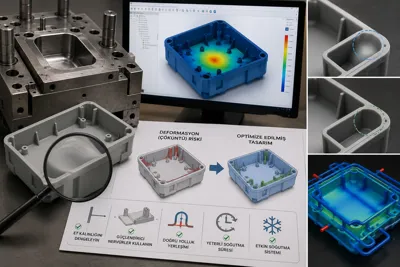
Contract manufacturing of plastic parts and mold integration.
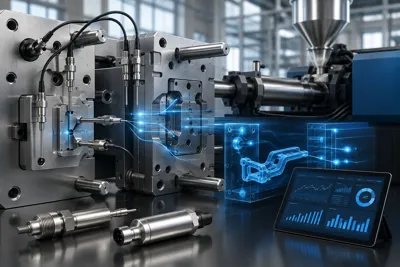
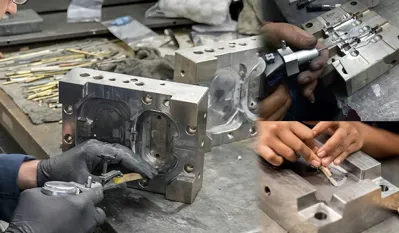
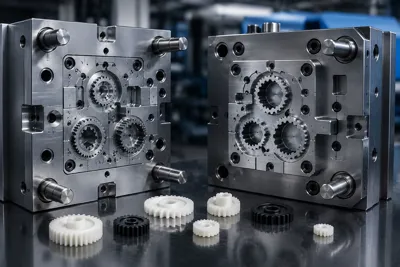
Contract manufacturing of plastic parts is the process of integrating existing injection molds, owned by the customer, into the manufacturer's machine park for mass production. During the mold integration phase, the mold's mounting plates, ejector group, runner dimensions, and cooling nipple inlets are adapted to the technical specifications of the injection molding machine (50-1200 tons). Raw material drying operations (using dew-point honeycomb dryers), melting temperature control, and part quality are monitored according to ISO 9001 standards to optimize unit costs per part.
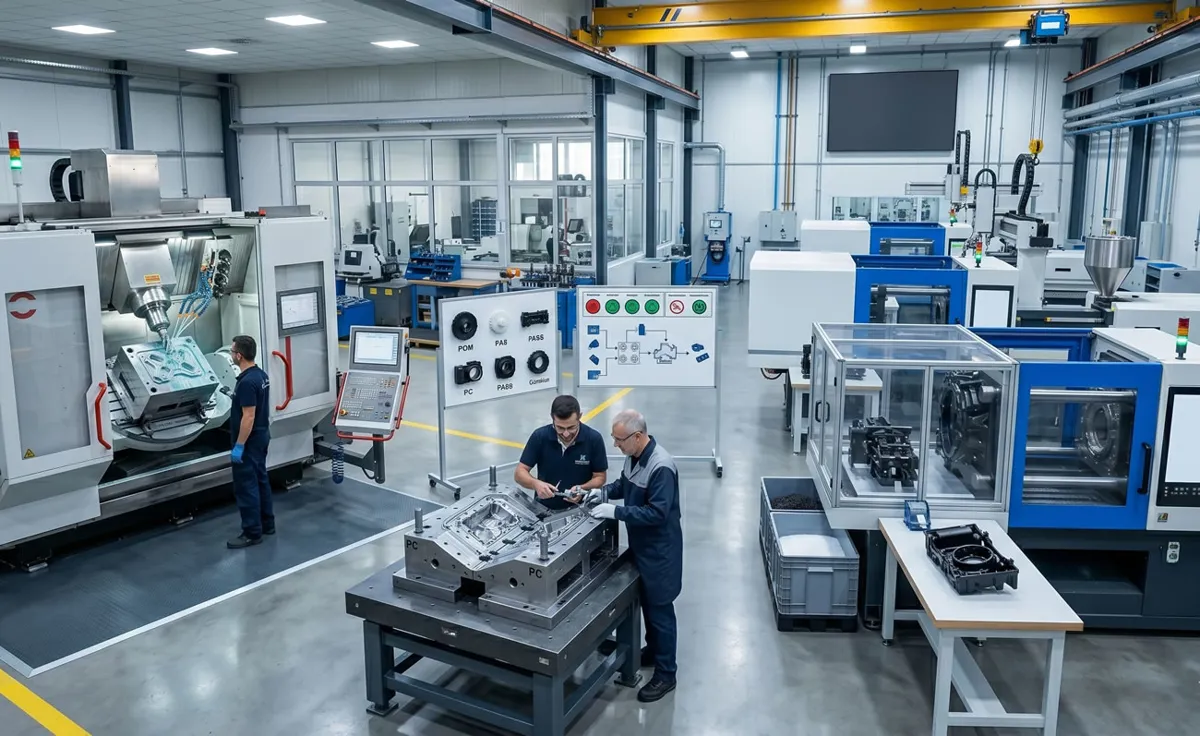
Why Do B2B Manufacturers Choose Contract Plastic Part Manufacturing and Outsourcing?
For industrial equipment manufacturers, automotive OEMs, home appliance producers, and consumer electronics brands, the primary business focus is generally product development, assembly, marketing, and final product manufacturing. Establishing and operating an in-house plastic injection molding facility requires significant investments in machinery, raw material logistics, production planning, maintenance, energy consumption, and shift-based manufacturing operations, resulting in substantial operational expenditures (OPEX).
This is where contract plastic part manufacturing and manufacturing outsourcing become strategic advantages. Companies retain ownership of their injection molds, protecting their intellectual property and production know-how, while transferring machine operation, energy consumption, labor, maintenance, and manufacturing management responsibilities to an experienced contract injection molding partner. This approach provides greater operational flexibility, improves production scalability, and delivers measurable financial benefits.
What Is Mold Integration? Steps for a Successful Production Transfer
The process of transferring an injection mold previously manufactured or operated at another production facility into a new manufacturing plant is known as mold integration. To ensure that the mold operates flawlessly from the very first production cycle, several engineering validation procedures must be completed.
Mechanical and Geometrical Compatibility Verification
The external dimensions of the mold must be compatible with the injection molding machine's tie-bar clearance as well as its minimum and maximum mold height capacity. In addition, the mold's locating ring must be perfectly aligned with the machine nozzle to ensure accurate injection alignment. Ejector rod holes, clamping slots, and mounting interfaces should be inspected according to international standards, and any necessary mechanical modifications should be completed before production begins.
Hydraulic, Core-Pull and Electrical Integration
If the mold incorporates hydraulic cylinders or side core mechanisms, the machine's hydraulic valve system and control software must be properly integrated with the mold's electrical signaling system. For hot runner molds, the electrical pin configuration between the mold heater connectors and the contract manufacturer's hot runner temperature controller must be verified to guarantee stable thermal control and consistent processing conditions throughout production.
Raw Material and Drying Management in Contract Plastic Injection Molding
One of the most critical—but often overlooked—factors affecting part quality in contract manufacturing is proper moisture management of engineering plastics. Hygroscopic materials such as PA6, PA66, PC, PMMA, and PET must be dried before molding in desiccant dryers using process air with a dew point of approximately -40°C. Insufficiently dried materials undergo hydrolytic degradation inside the injection barrel, leading to defects such as silver streaks, internal voids, surface imperfections, and, most importantly, reductions in mechanical strength that may exceed 50%. For this reason, the drying technology and material handling capability of your contract manufacturing partner should be evaluated as carefully as its production capacity.
Supply Chain Security: Mold Insurance and Preventive Maintenance Guarantees
As long as your injection molds remain at the contract manufacturer's facility, they continue to be valuable production assets owned by your company. A professional contract manufacturing partner should therefore provide comprehensive protection for customer-owned molds through insurance coverage against fire, flooding, theft, and other industrial risks. Equally important is the implementation of a structured preventive maintenance program throughout the production lifecycle.
Routine maintenance should include cleaning mold parting surfaces and venting areas at the end of every production shift, lubricating ejector pins and moving components, and performing scheduled preventive maintenance after predetermined production intervals (for example, every 50,000 molding cycles). Providing these maintenance services without additional cost is one of the key characteristics of a reliable long-term B2B manufacturing partnership, helping to maximize mold life, maintain dimensional consistency, and minimize unplanned production downtime.
Frequently Asked Questions (FAQ)
How Long Will Production Be Interrupted When Transferring Our Existing Mold to Your Facility?
Provided that the mold drawings, technical documentation, and machine interface specifications are supplied in advance, mold integration and machine setup can typically be completed within 24 to 48 hours. Following approval of the initial T1 trial samples, full-scale contract production can begin immediately, ensuring continuity throughout your supply chain with minimal production interruption.
Can We Supply Our Own Raw Materials?
Yes. Our flexible B2B manufacturing model allows customers either to supply their own raw materials directly—where only machine time and processing services are invoiced—or to utilize our global raw material procurement network, enabling access to internationally recognized polymer suppliers at highly competitive prices.
How Are Scrap Rates Controlled in Contract Injection Molding?
Throughout production, runners and process scrap are continuously monitored and weighed to optimize material utilization. In hot runner systems, material waste is typically reduced to nearly zero. For cold runner molds, runner scrap can be granulated and recycled with customer approval under controlled processing conditions, allowing a specified percentage of regrind material to be reintroduced into production while minimizing raw material losses without compromising product quality.
Integrate Your Injection Molds into a Reliable and High-Performance Manufacturing Environment
Focus on your core business while we manage production operations, energy consumption, mold maintenance, and manufacturing efficiency. With our modern servo-driven injection molding machines ranging from 50 to 1,200 tons of clamping force and our experienced engineering team, we are ready to become your trusted contract manufacturing partner. Share your existing mold dimensions, part weights, annual production volumes, and technical specifications with us, and we will prepare a customized B2B manufacturing proposal optimized for quality, efficiency, and long-term cost competitiveness.
Recommended for You
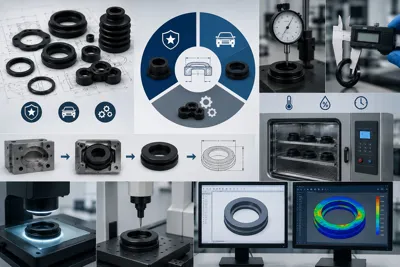
Rubber tolerances and TS ISO 3302-1 standard guide.
In industrial rubber products, dimensional and geometric tolerances are determined according to the TS ISO 3302-1 standard due to the high shrinkage (1.5% - 4%) and elasticity characteristics of elastomers. This international standard classifies molded parts into three basic classes based on their dimensional accuracy: M1 (Precision/Defense), M2 (High Quality/Automotive), and M3 (Commercial/General Machinery). Measurements are verified using optical and digital measuring instruments in climate-controlled laboratory environments at a temperature of 23°C +/- 2°C and 50% relative humidity, at least 16 hours after the part has completed its vulcanization reaction and thermal stabilization.