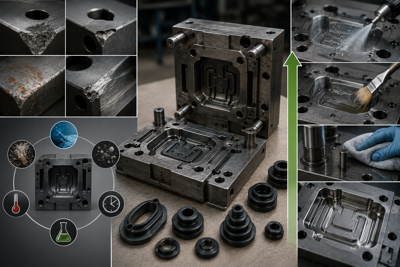
Automotive rubber and plastic parts manufacturing and OEM solutions.
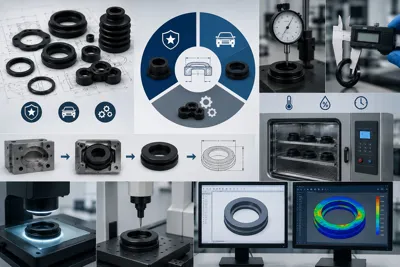
In the automotive sub-industry, the production of rubber and plastic parts is carried out according to IATF 16949 Quality Management System standards. Active production processes include high-temperature and oil-resistant ACM, AEM, and FKM (Viton) compounds for engine seals, and natural rubber (NR) and EPDM formulations for dynamic damping in suspension lines. Dimensional verifications are performed using 3D CMM devices within the scope of PPAP (Production Part Approval Process) processes and are guaranteed to meet TS ISO 3302-1 M1/M2 accuracy classes.
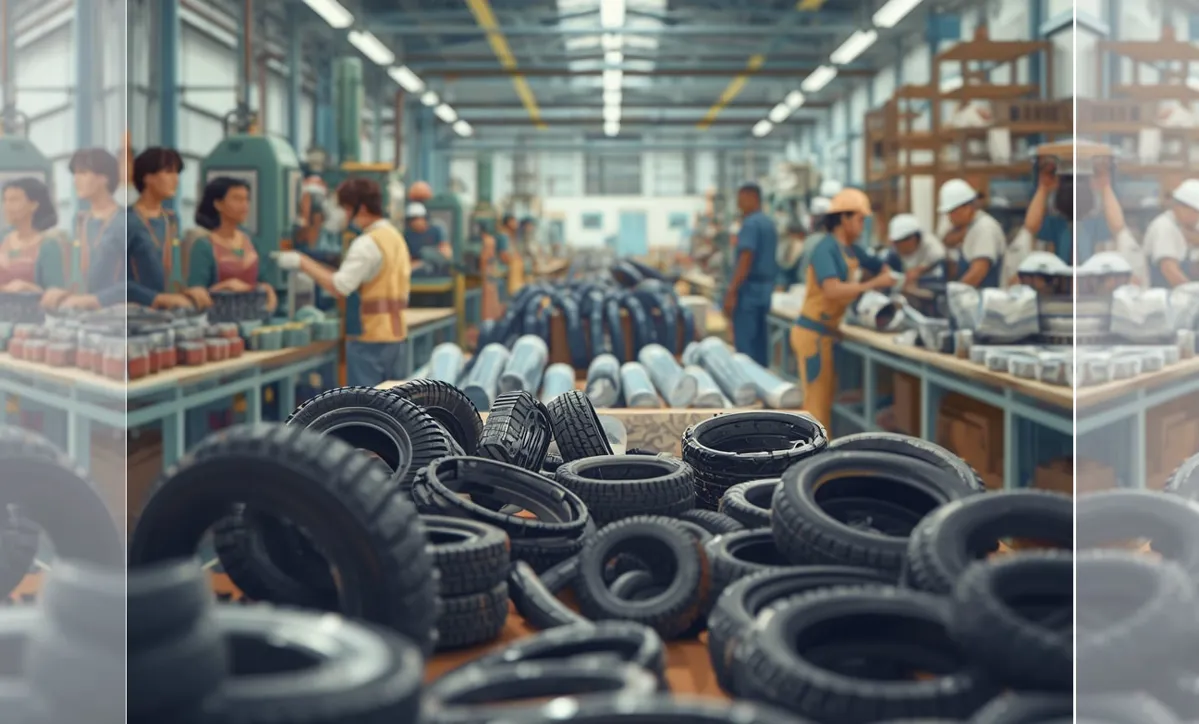
The Role of Rubber and Plastic Components in the Automotive Industry (NVH and Lightweighting)
In modern vehicle design, lightweighting, fuel efficiency, NVH (Noise, Vibration, and Harshness) attenuation, and high sealing performance are of critical importance. The only way to meet these expectations is through automotive rubber component manufacturing and high-strength technical plastic injection molding processes designed using advanced engineering methods. While engineering plastics that replace metal components reduce vehicle weight, specially formulated rubber mounts and bushings prevent engine and road vibrations from being transmitted into the cabin. Tier-1 and Tier-2 OEM suppliers and subcontractors consider technical competence, sustainable quality, and compliance with international standards as top priorities when selecting suppliers.
Integration of the IATF 16949 Quality System and PPAP Approval Processes into Production
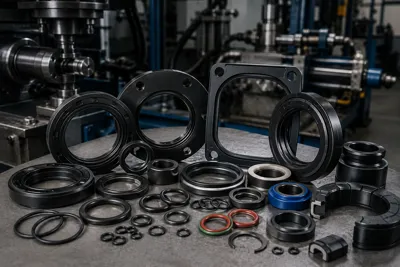
There is no tolerance for errors in automotive supplier projects. Every rubber mount, O-ring, under-hood gasket, or aesthetic plastic panel produced is exposed to varying climatic conditions, mechanical stresses, and chemical fluids throughout the vehicle’s service life. Therefore, our production lines are managed in accordance with the guidelines of the international automotive quality standard IATF 16949.
During the launch phase of a new project, APQP (Advanced Product Quality Planning) and FMEA (Failure Modes and Effects Analysis) documentation are prepared, while mass production approval is achieved through the submission of a comprehensive PPAP (Production Part Approval Process) package. Supported by Statistical Process Control (SPC) data, production lines continuously maintain machine capability values (Cpk and Ppk) above 1.67.
Automotive Rubber Component Manufacturing: Strategic Raw Materials and Location-Based Analysis
The thermal and chemical resistance requirements of rubber components vary significantly depending on their installation location within the vehicle. Proper mold engineering must be designed according to the flow characteristics (viscosity) and curing curves of the selected raw material:
Chassis and Suspension Components (NR / EPDM)
Natural Rubber (NR)-based compounds, offering high elasticity, tear resistance, and dynamic fatigue durability, are processed for axle boots, shock absorber mounts, stabilizer bar bushings, and exhaust hangers. The mechanical damping coefficients of these components are verified through rheometer testing.
Under-Hood and Fluid Management Applications (FKM / HNBR / ACM)
For locations exposed to engine oils, transmission fluids, and high temperatures (150°C–250°C), Fluoroelastomers (Viton) and Acrylic Rubber derivatives are used to achieve zero-leakage performance. In radiator and turbocharger hoses, EPDM or AEM compounds reinforced with textile braiding are molded to withstand pressure and glycol-based mixtures.
Rubber-to-Metal Bonding (Overmolding) Technology and Adhesion Strength
Engine mounts used in automotive chassis to isolate engine vibrations from the vehicle body require the molecular-level bonding of rubber and metal. In this process, metal inserts (steel or aluminum) undergo sandblasting and chemical degreasing treatments before special primers and Chemolok bonding agents are applied uniformly using robotic coating systems.
Rubber is then injected over the heated metal inserts placed inside the mold, creating exceptional rubber-to-metal adhesion during vulcanization. The quality of this bond is continuously monitored in laboratory environments through tensile and tear testing in accordance with the ASTM D429 standard.
DIN 16742 Geometric Tolerances for Automotive Plastic Injection Components
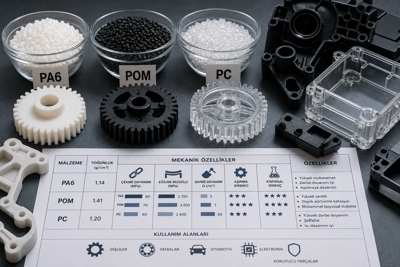
In addition to rubber components, technical plastic injection molding solutions are provided for interior trim panels, lighting assembly housings, and engine compartment plastic covers. To ensure dimensional stability in plastic components, DIN 16742 or the latest ISO 20457 geometric tolerance standards are applied. The in-mold shrinkage behavior of engineering plastics such as PA6, PA66 (30–50% glass fiber reinforced), POM, and PC is analyzed using Moldflow simulation software based on wall-thickness correlations, enabling defect-free mold manufacturing.
Frequently Asked Questions (FAQ)
How Long Does PPAP Approval Take in Automotive Component Manufacturing?
The PPAP process is typically approved within 2 to 4 weeks after mold manufacturing is completed, T1 (first sample) production is performed, dimensional inspection reports (CMM) are prepared, laboratory tests (hardness, aging, wear resistance) are conducted, and a 300-cycle Statistical Process Control (SPC/Cpk) study is completed on the injection molding machine.
How Is the Bonding Quality of Rubber-to-Metal Mounts Tested?
Adhesion strength is measured using tensile and peel test methods on universal testing machines in accordance with ASTM D429. The objective is not for the rubber to separate from the metal during testing, but for the rubber itself to tear internally (100% rubber failure).
Which Standards Are Required in Automotive Component Specifications?
For rubber components, M1 or M2 classes of the TS ISO 3302-1 standard are typically applied, while DIN 3760 is required for sealing rings and shaft seals, and TS ISO 3601-1 is required for O-ring applications. Full compliance with these regulations is mandatory.
Approved Supplier Solutions for Your Automotive Projects
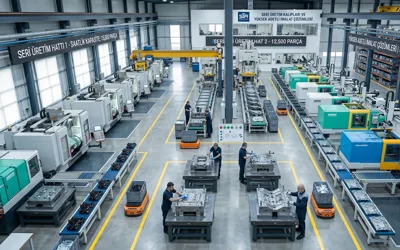
With our IATF 16949-compliant molding infrastructure operating at Tier-1 standards, we are ready to provide technical support for your OEM projects. Contact us with your RFQ, technical specifications, quality plans, and 3D data.
Recommended for You
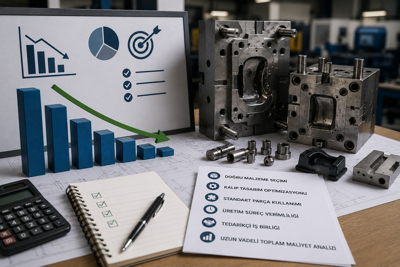
Strategies for Reducing Mold Costs
Strategies for reducing mold costs include eliminating undercuts through DFM (Design for Manufacturing) analyses during product development (R&D), optimizing part wall thicknesses, and simplifying core mechanisms. Selecting cavitation (number of cavities) and steel grades according to SPI standards (e.g., 1.2311 vs. 1.2344) based on annual part projections optimizes the initial mold investment cost (CAPEX) by 30% to 50%. The use of modular mold holder systems and standard mold elements permanently reduces CNC machining times and per-part depreciation costs.