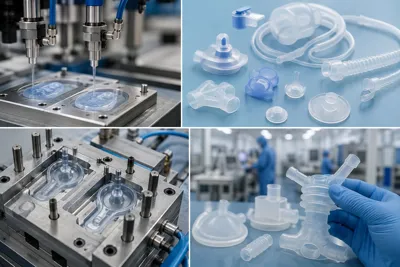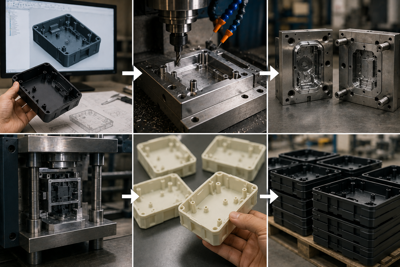
How is steel selected for plastic injection molds?
Steel selection for plastic injection molds depends on the abrasiveness of the polymer to be molded, the annual production volume (SPI classes), and the expected surface finish of the part. For abrasive glass fiber reinforced (GF) polymers, vacuum-hardened DIN 1.2344 hot work steel with a hardness of 48-52 HRC is suitable; for transparent or corrosive PVC/fluoropolymer components, stainless DIN 1.2083 steel containing a minimum of 13% chromium is recommended; and for standard body parts, pre-hardened DIN 1.2738 (P20+Ni) steel offers optimized metallurgical solutions.
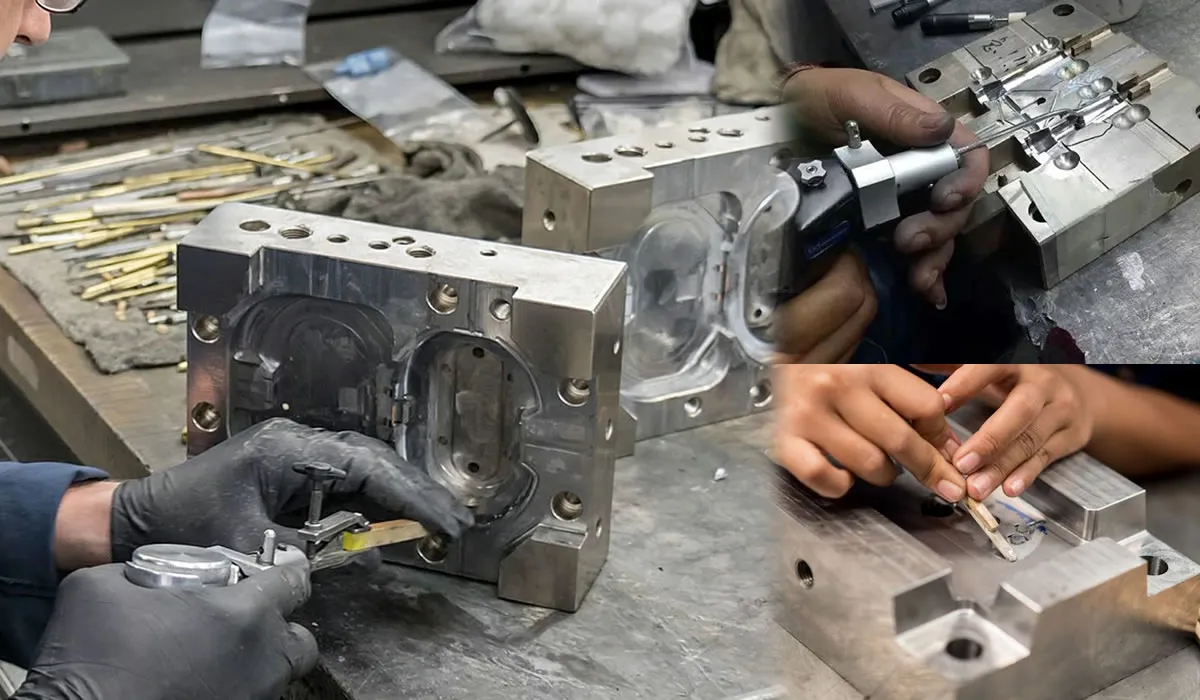
In the plastics injection molding industry, the technical success and financial return on investment of a project depend directly on the quality of the steel used in the mold base and cavity blocks. Steel selection for plastic injection molds is not a decision that should be based solely on initial investment costs or arbitrary preferences. Mold steel must withstand the mechanical stresses generated as molten polymer fills the cavities under high injection pressure, resist substantial clamping forces, and endure continuous thermal cycling throughout long production runs. Selecting the wrong steel grade can lead to premature mold cracking, cavity wear, dimensional inaccuracies, and—most critically—unexpected production downtime that disrupts the entire B2B supply chain.
Essential Properties Required for Plastic Injection Mold Steels
During the transition from mold design to manufacturing, selecting the appropriate steel alloy requires an optimal balance between mechanical strength, machinability, and thermal stability.
Wear and Abrasion Resistance
Mold cavities are continuously exposed to the flow of molten polymers under high pressure. Engineering plastics reinforced with glass fiber (GF), carbon fiber, talc, calcium carbonate, or other mineral fillers produce a significant abrasive effect on steel surfaces, accelerating cavity wear over time. For these highly abrasive materials, mold steels with superior wear resistance and hardness enhanced through vacuum heat treatment should always be selected to maximize mold life.
Thermal Conductivity and Uniform Cooling Performance
Cooling efficiency is one of the most important factors affecting both part quality and injection molding cycle time. The higher the thermal conductivity of the mold steel, the faster heat is transferred away from the cavity, resulting in shorter cooling times and improved production efficiency. Steels with excellent thermal conductivity contribute directly to lower unit production costs, providing a significant competitive advantage for B2B manufacturers.
Polishability and Photo-Chemical Texturing Compatibility
Applications such as automotive interior trim components, appliance front panels, and optical lenses demand exceptionally high surface quality. To achieve mirror polishing or chemically etched textures, the steel must possess a homogeneous microstructure with minimal inclusions and uniformly distributed carbides. Otherwise, polishing and texturing processes may produce waviness, micro-pitting, or other surface imperfections that negatively affect the appearance and functionality of molded parts.
Most Common Plastic Injection Mold Steels and Their Application Matrix
In our industrial mold manufacturing processes, we select the most appropriate steel grade based on your project's expected annual production volume, polymer characteristics, and performance requirements, while supplying complete metallurgical certification for every mold component.
DIN 1.2738 (AISI P20+Ni) — The Reliable Industry Standard
DIN 1.2738 is supplied in a pre-hardened condition, typically between 28–32 HRC, allowing direct CNC machining without additional heat treatment. Thanks to its nickel (Ni) alloying content, this steel provides excellent hardness uniformity throughout large mold blocks. It is one of the most widely used and cost-effective solutions for manufacturing automotive bumpers, large plastic housings, appliance enclosures, and other high-volume injection molded components.
DIN 1.2344 (AISI H13) — Superior Strength and Thermal Resistance
As a premium hot-work tool steel, DIN 1.2344 is machined in its annealed condition before undergoing vacuum heat treatment to achieve hardness levels between 48 and 52 HRC. It offers exceptional toughness, compressive strength, and outstanding resistance to thermal fatigue and heat checking. This makes it the preferred cavity steel for high-volume production molds (SPI Class 101) and for molding highly abrasive engineering plastics reinforced with glass fibers.
DIN 1.2083 (AISI 420) — Corrosion-Resistant Stainless Mold Steel
Containing approximately 13% chromium (Cr), DIN 1.2083 is a stainless mold steel capable of reaching hardness levels of 50–54 HRC after heat treatment. It is particularly recommended for processing PVC, fluoropolymers such as PTFE and PVDF, and transparent polymers like polycarbonate, where corrosive gases or moisture exposure may damage conventional tool steels. This grade provides excellent corrosion resistance while maintaining outstanding surface finish quality required for optical and transparent molded components.
Steel Selection Criteria Based on the Plastic Material Being Molded
The chemical composition and physical characteristics of the polymer being processed have a direct impact on mold life and long-term production performance. Selecting the correct mold steel for each engineering plastic is essential for maximizing durability, maintaining dimensional accuracy, and minimizing maintenance costs. The following steel recommendations represent industry best practices for common engineering polymers.
-
PA6 and PA66 (30–50% Glass Fiber Reinforced): The glass fibers contained in these materials create significant abrasive wear on cavity surfaces. Therefore, hardened DIN 1.2344 (AISI H13) should always be used for cavity and core inserts, while DIN 1.2738 is generally sufficient for the mold base and support components.
-
PVC (Polyvinyl Chloride): During processing, PVC releases corrosive gases containing hydrochloric acid (HCl), which chemically attack conventional tool steels. For this reason, cavity components should always be manufactured from corrosion-resistant DIN 1.2083 (AISI 420) stainless mold steel.
-
Polycarbonate (PC) – Transparent Components: Optical-grade plastic parts require an absolutely flawless cavity surface, as even microscopic scratches or polishing defects become visible on transparent products. Hardened DIN 1.2083 ESR (Electro Slag Remelted) stainless steel is the preferred solution because it offers exceptional polishability, microstructural homogeneity, and superior surface stability.
-
PP, PE and PS (Commodity Thermoplastics): These polymers exhibit relatively low abrasion and corrosion potential. For medium-volume production applications, pre-hardened DIN 1.2738 or the more economical DIN 1.2311 (P20) provides an excellent balance between performance, manufacturability, and tooling cost.
Heat Treatment Control and the Impact of Hardness (HRC) on Mold Service Life
Heat treatment is one of the most critical stages in mold manufacturing. Core and cavity inserts are first precision-machined in their annealed condition using CNC equipment. They are then subjected to carefully controlled vacuum heat treatment, where the steel is heated into the austenitic phase, rapidly quenched to produce a martensitic structure, and finally tempered to relieve internal stresses while achieving the required hardness.
Even minor temperature deviations during this process may result in microcracking, distortion, or unacceptable dimensional changes. Therefore, post-heat-treatment hardness verification using the Rockwell Hardness Scale (HRC), together with complete metallurgical documentation and process records, is essential. Proper heat treatment ensures that mold cavities maintain their dimensional stability under high injection pressures while preventing premature deformation, indentation, and fracture throughout long-term production.
Frequently Asked Questions (FAQ)
What Is the Difference Between Pre-Hardened Mold Steels and Steels That Require Heat Treatment?
Pre-hardened steels such as DIN 1.2738 are supplied by the steel manufacturer at approximately 28–32 HRC, allowing mold makers to machine the steel directly without additional heat treatment. This shortens manufacturing lead time and reduces production costs. Tool steels such as DIN 1.2344, however, are machined in their annealed condition and subsequently hardened to approximately 50 HRC through vacuum heat treatment. Although this increases manufacturing time and tooling cost, it significantly extends mold service life and improves resistance to wear and thermal fatigue.
What Does ESR (Electro Slag Remelting) Technology Mean for Mold Steels?
Electro Slag Remelting (ESR) is a secondary refining process that substantially reduces sulfur, oxygen, and non-metallic inclusions within the steel. Mold steels produced using ESR technology—such as DIN 1.2083 ESR—offer superior microstructural cleanliness, exceptional polishability, outstanding photo-etched texture consistency, and highly uniform mechanical properties. They are the preferred choice for optical components and products requiring premium cosmetic surface quality.
What Problems Can Be Caused by Selecting the Wrong Mold Steel?
If a pre-hardened steel is used to mold highly abrasive glass fiber reinforced plastics, cavity wear may occur after only a relatively small number of production cycles, leading to dimensional inaccuracies, flash formation, and increased maintenance costs. Likewise, processing corrosive materials such as PVC with conventional tool steels can result in rapid corrosion of cavity surfaces, deteriorated surface finish, and increasingly difficult part ejection over time.
Secure the Future of Your Projects with Certified Mold Steels and Advanced Metallurgical Engineering
Eliminate costly production interruptions caused by premature mold wear, cracking, and dimensional instability. At kaucukplastikkalip.com, every plastic injection mold is manufactured using spectrometer-certified tool steels selected specifically for the chemical and mechanical characteristics of the polymer being processed. Each critical component is supported by comprehensive heat treatment reports and metallurgical certification. Share your 3D CAD models, annual production targets, and material specifications with our engineering team, and we will prepare a technically optimized B2B tooling proposal featuring the most suitable mold steel selection for your application.
Recommended for You

EPDM, NBR, and Silicone: Which rubber raw material should be chosen?
The selection of rubber raw materials is based on the continuous operating temperature to which the final elastomeric part will be exposed, the chemical fluids it will come into contact with (oil, fuel, solvent), and the environmental factors it will be exposed to (ozone, UV, weather conditions). NBR (Nitrile) offers superior mineral oil and fuel resistance between -30°C and +110°C, while EPDM provides excellent ozone, UV, and steam resistance in the range of -40°C to +140°C. Silicone (VMQ), on the other hand, demonstrates full compliance with food and medical standards (FDA) with its physiological harmlessness in the extreme thermal spectrum of -60°C to +220°C.