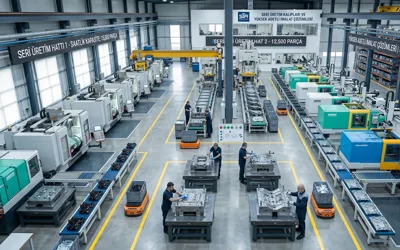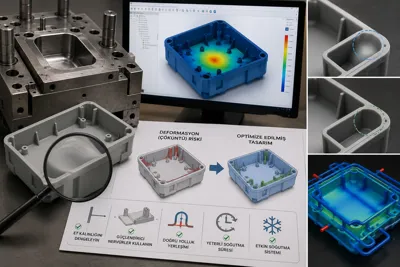
Mass production molds and high-volume manufacturing solutions.
High-volume series production mold manufacturing is an engineering discipline applied to minimize cycle times and increase line efficiency (OEE) to over 85%. In high-volume manufacturing lines, powder metallurgical steels (Bohler M390, Elmax, etc.) with a hardness of 52-54 HRC according to the SPI Class 101 standard and corrosion-resistant DIN 1.2083 alloys are used. In multi-cavity molds, hot runner systems and conformal cooling channels that follow the part geometry in 3D are integrated for a balanced polymer distribution.
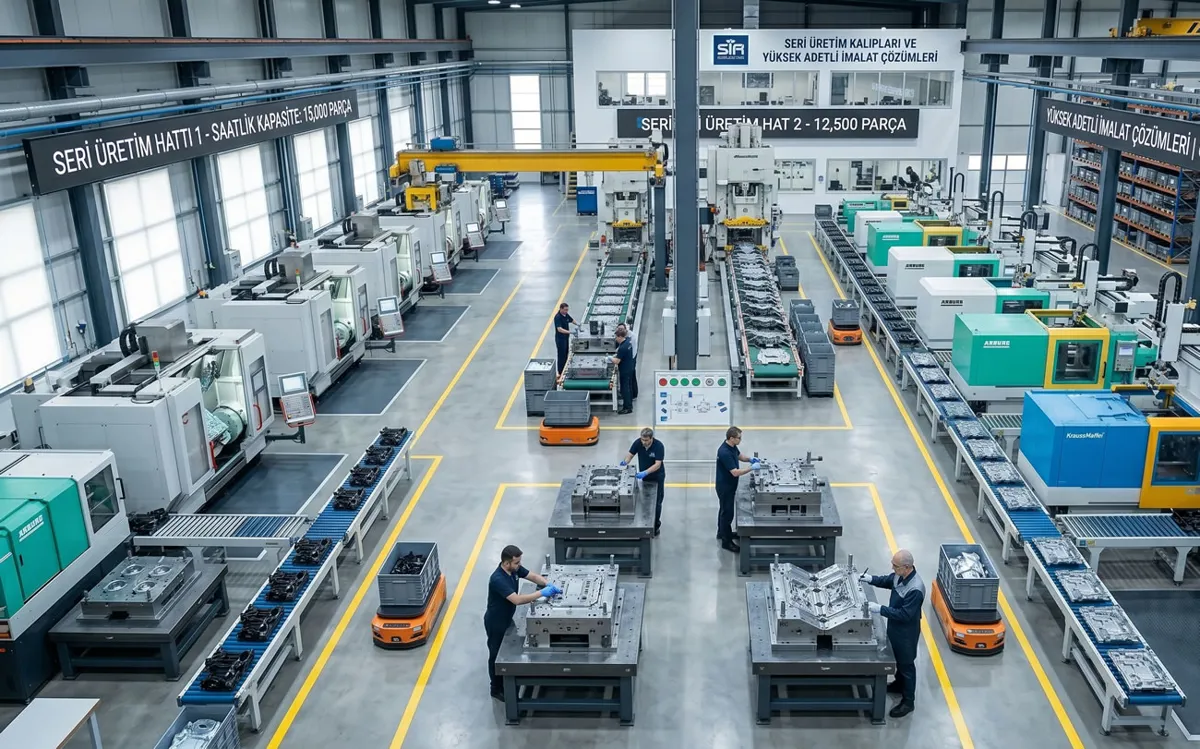
Selection Criteria for Mass Production Molds in High-Volume Manufacturing
In industrial projects with annual production volumes reaching hundreds of thousands or even millions of units, conventional mold designs cannot meet production speed and cost targets. OEM-level industries such as automotive, home appliances, medical devices, and fast-moving consumer goods must reduce per-part production times to mere seconds. Mass production molds are designed with the mechanical durability, thermal stability, and minimal maintenance downtime required to keep pace with these high-speed manufacturing environments. In B2B production strategies, a properly engineered mass production mold can recover its initial capital investment (CAPEX) in a remarkably short period through increased production efficiency.
Rheological Runner Balancing in Multi-Cavity Molds
The first rule of high-volume manufacturing is maximizing the number of parts produced in a single injection molding cycle. For this purpose, molds with 4, 8, 16, 32, or even 64 cavities are implemented. However, as the number of cavities increases, ensuring that molten plastic reaches each cavity simultaneously, at the same temperature and pressure, becomes increasingly challenging.
Our engineering team performs rheological balancing analyses for multi-cavity mold projects. The manifold flow channels within hot runner systems are dimensioned with micron-level precision using Moldflow simulation software. As a result, the component produced in cavity 1 and the component produced in cavity 64 exhibit identical weight, dimensional tolerance, and surface quality, while scrap rates are reduced to near zero.
Cycle Time Optimization Through Conformal Cooling Technology
In plastic injection molding and rubber molding processes, approximately 60% to 70% of the total cycle time is consumed by the cooling and solidification phase inside the mold. In conventional molds, straight drilled cooling channels cannot maintain equal proximity to every area of a complex part geometry. This often leads to localized temperature differences and part warpage.
As part of our advanced mass production solutions, we utilize mold cores manufactured through Selective Laser Melting (SLM) metal additive manufacturing technology. Conformal cooling channels follow the contours of the part geometry in three dimensions. Positioned at a consistent distance from the mold cavity surfaces, these curved cooling channels maximize heat transfer efficiency, reducing cooling time—and therefore total cycle time—by 20% to 40%. This optimization translates directly into thousands of additional parts produced per day.
Material Selection and Wear Plate Design According to SPI Class 101 Standards
A mold intended to exceed one million production cycles must withstand continuous high pressure, clamping force, and mechanical friction. According to international SPI standards, molds classified as Class 101 require steel components that are vacuum heat-treated to achieve a hardness of at least 52–54 HRC after machining.
-
Cavity and Core Steels: High-strength DIN 1.2344 hot-work tool steel is commonly used, while corrosion-resistant DIN 1.2083 stainless mold steel is preferred for abrasive plastics such as glass-fiber-reinforced polymers.
-
Wear and Locking Plates: To reduce friction on surfaces where moving cores and mechanisms interact, graphite-embedded bronze wear plates or specially alloyed wear plates hardened to 60 HRC are integrated into the mold design. This significantly minimizes mechanical wear and extends mold service life.
Total Cost of Ownership (TCO) and Depreciation Analysis for B2B Procurement Managers
One of the most common mistakes in evaluating mold quotations from suppliers is focusing solely on the mold manufacturing price. A true cost assessment should be based on Total Cost of Ownership (TCO). Factors such as cycle time, maintenance frequency, scrap rates, energy consumption, and mold lifespan have a far greater impact on long-term profitability than the initial mold investment alone.
Frequently Asked Questions (FAQ)
How Much Does a Conformal Cooling System Increase the Initial Mold Investment Cost?
Mold cores with conformal cooling channels are manufactured using metal additive manufacturing (laser sintering) technology, which can increase core manufacturing costs by approximately 30% to 50% compared to conventional machining methods. However, in high-volume production environments, the resulting cycle time reduction of around 30% typically allows this investment difference to be recovered within a few months.
How Can Runner Imbalance Be Detected in Multi-Cavity Molds?
When a runner system is unbalanced, injection pressure is distributed unevenly among the cavities. As a result, molded parts may show weight variations when measured on precision scales. Some cavities may produce parts with flash defects, while cavities farther from the gate may experience short-shot defects. Such issues should be identified and eliminated through Moldflow analysis before mold manufacturing begins.
What Does Preventive Maintenance for an SPI Class 101 Mold Include?
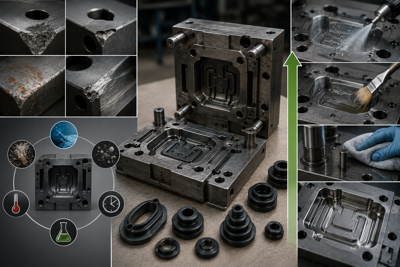
Maintenance of a Class 101 mold includes removing the mold from the machine every 100,000 cycles, complete disassembly, ultrasonic cleaning of moving components such as ejector pins and core mechanisms to remove polymer residue, inspection for wear, and reassembly with high-temperature lubricants. These procedures ensure maximum mold longevity and consistent production quality.
Flawless Mold Engineering for Your High-Speed Production Lines
We provide advanced engineering solutions to reduce cycle times, eliminate scrap rates, and maximize OEE performance in your high-volume manufacturing projects. For multi-cavity mold designs, hot runner integrations, and conformal cooling applications, share your 3D CAD data with our technical team and request a comprehensive B2B analysis and customized quotation.
Recommended for You
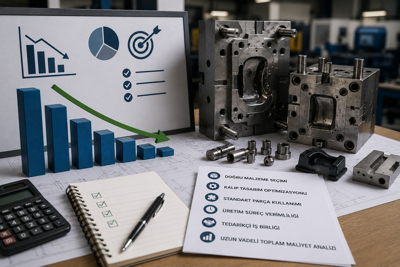
Strategies for Reducing Mold Costs
Strategies for reducing mold costs include eliminating undercuts through DFM (Design for Manufacturing) analyses during product development (R&D), optimizing part wall thicknesses, and simplifying core mechanisms. Selecting cavitation (number of cavities) and steel grades according to SPI standards (e.g., 1.2311 vs. 1.2344) based on annual part projections optimizes the initial mold investment cost (CAPEX) by 30% to 50%. The use of modular mold holder systems and standard mold elements permanently reduces CNC machining times and per-part depreciation costs.