TECHNICAL ENGINEERING GUIDE
Frequently Asked Questions Regarding Tooling & Mass Production
Details about our rubber compression, plastic injection tooling, and high-volume contract manufacturing capabilities in Konya OSB, Turkey.
1. What is the fundamental manufacturing difference between rubber molding and plastic injection?
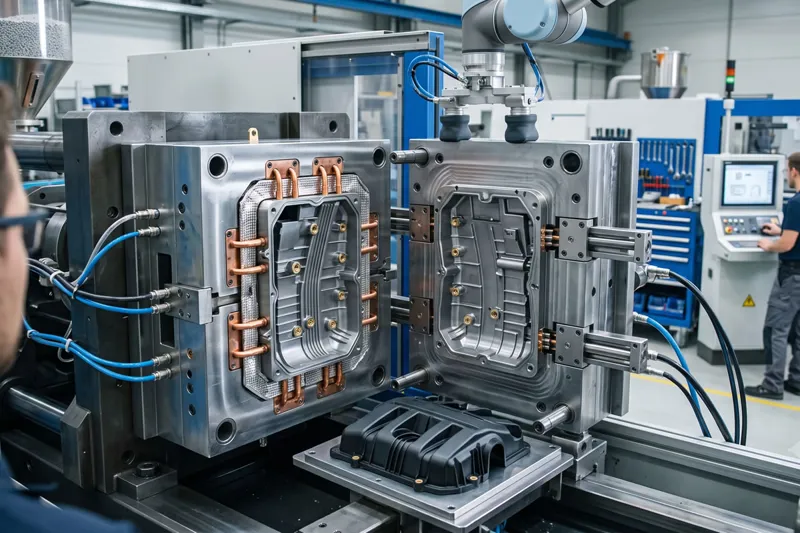
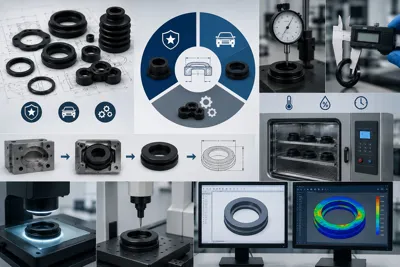
In plastic injection molding, polymer resin (ABS, POM, PA6) is melted in a heated barrel and injected into a cold mold core where it solidifies. In rubber compression or transfer molding, the process is inverted; the raw compound (EPDM, NBR, Viton) is placed inside a hot mold (160°C - 190°C) and chemically cured under high pressure. Therefore, rubber mold design requires highly complex calculations for compound shrinkage rates and air ventilation placement.
2. How long does a typical mold design (CAD/CAM) and manufacturing cycle take?
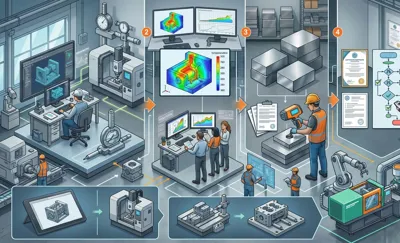
Depending on part geometry, the process spanning from 3D CAD design to CNC machining (CAM), hardening, and T1 sample validation takes between 3 to 6 weeks. Our tools are built using premium hot-work steels (DIN 1.2344, 1.2738, 1.2083) and finished in high-precision 3/5-axis CNC vertical machining centers.
3. Do you provide contract mass production services? Do you accept existing molds?
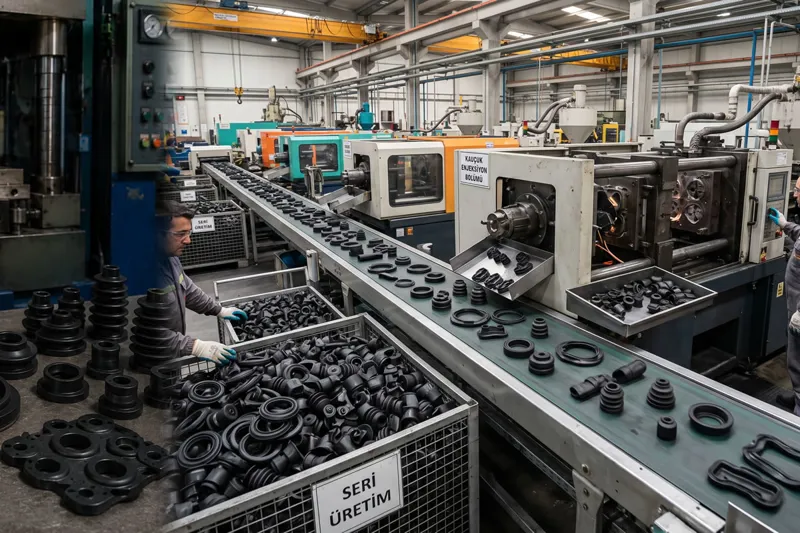
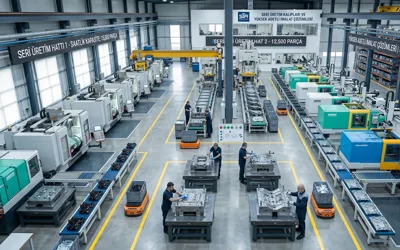
Yes, we provide both tool manufacturing and contract mass production. Our facility features vacuum rubber compression presses from 50 to 600 tons and robotic plastic injection machinery from 60 to 800 tons. We readily accept customer-owned existing molds, providing complete preventative maintenance, calibration, and optimal cycle times.
4. How do you protect technical CAD data in international B2B collaborations?
Every 3D CAD drawing (STEP, IGES, DXF) shared with us is stored on secure local servers. Our company signs a corporate Non-Disclosure Agreement (NDA) prior to any project review, guaranteeing that your proprietary engineering designs and patents are legally protected and kept 100% confidential.