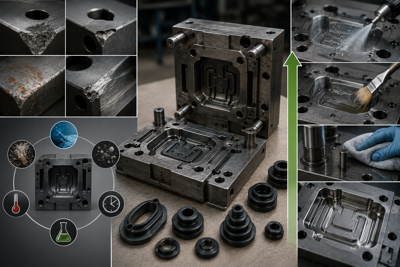
EPDM, NBR, and Silicone: Which rubber raw material should be chosen?
The selection of rubber raw materials is based on the continuous operating temperature to which the final elastomeric part will be exposed, the chemical fluids it will come into contact with (oil, fuel, solvent), and the environmental factors it will be exposed to (ozone, UV, weather conditions). NBR (Nitrile) offers superior mineral oil and fuel resistance between -30°C and +110°C, while EPDM provides excellent ozone, UV, and steam resistance in the range of -40°C to +140°C. Silicone (VMQ), on the other hand, demonstrates full compliance with food and medical standards (FDA) with its physiological harmlessness in the extreme thermal spectrum of -60°C to +220°C.

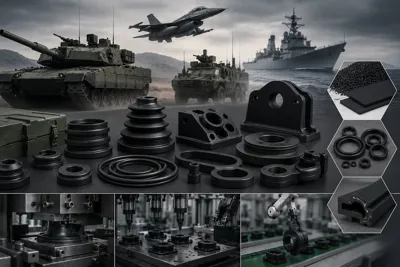
For sealing components, vibration dampers, protective bellows, and other elastomer products used across B2B industries such as machinery manufacturing, automotive, defense, food processing, and chemical production, rubber compound selection is one of the most critical engineering decisions affecting the overall service life of a project. Selecting the wrong elastomer may cause seals to swell after prolonged exposure to process fluids, harden and crack under elevated temperatures, or develop microscopic ozone-induced surface cracks that eventually lead to failure. These problems often result in leakage, unexpected production downtime, and costly interruptions throughout industrial manufacturing lines. Understanding the capabilities and limitations of the three most widely used industrial elastomers—NBR, EPDM, and Silicone (VMQ)—is therefore essential for making the right material selection in professional B2B procurement processes.
1. NBR (Nitrile Rubber) – The Industry Standard for Oil and Fuel Sealing Applications
NBR (Acrylonitrile Butadiene Rubber) is the most widely used elastomer for industrial sealing applications. Its molecular structure is formed through the copolymerization of butadiene and acrylonitrile monomers, providing an excellent balance between mechanical performance and resistance to petroleum-based fluids.
Mechanical Properties and Chemical Resistance of NBR
NBR seals exhibit outstanding resistance to mineral oils, lubricating greases, hydraulic fluids, gasoline, diesel fuel, and many petroleum-based chemicals. They offer excellent abrasion resistance, tensile strength, and tear resistance, making them ideal for dynamic sealing systems operating under mechanical stress. Their typical continuous operating temperature range extends from -30°C to +110°C, depending on compound formulation.
How Acrylonitrile (ACN) Content Influences Performance
The Acrylonitrile (ACN) content of an NBR compound—typically ranging from 18% to 50%—directly determines its overall performance characteristics. Increasing the ACN content significantly improves resistance to oils, fuels, and hydrocarbon-based chemicals while simultaneously enhancing mechanical strength. However, higher ACN levels reduce flexibility at low temperatures by increasing the material's glass transition temperature (Tg), making the rubber more brittle in cold environments. For industrial B2B applications, the optimum ACN percentage should always be selected according to the minimum operating temperature of the final application.
2. EPDM (Ethylene Propylene Diene Monomer) – The Preferred Elastomer for Outdoor and Harsh Environmental Conditions
EPDM (Ethylene Propylene Diene Monomer) is recognized worldwide for its exceptional environmental durability and chemical stability. Thanks to its saturated polymer backbone, EPDM has become the preferred elastomer for outdoor applications and systems exposed to severe weather conditions.
Outstanding Resistance to Ozone, UV Radiation, and Steam
EPDM rubber provides exceptional resistance to atmospheric ozone, ultraviolet (UV) radiation, weathering, acids, alkaline solutions, hot water, and glycol-based hydraulic brake fluids. It performs reliably in saturated steam applications with continuous operating temperatures reaching approximately +140°C. However, EPDM is not compatible with mineral oils, lubricants, gasoline, diesel fuel, or most petroleum-derived hydrocarbons. Exposure to these fluids causes rapid swelling, loss of mechanical strength, and premature material degradation.
Sulfur-Cured vs. Peroxide-Cured EPDM Compounds
EPDM compounds may be vulcanized using either sulfur-based or peroxide-based curing systems. Sulfur-cured EPDM compounds are generally more economical and provide excellent tensile strength and elongation at break. Peroxide-cured EPDM compounds, however, offer significantly higher thermal stability (up to approximately +150°C), lower compression set, superior aging resistance, and improved long-term dimensional stability. For critical industrial sealing systems and high-performance engineering applications, peroxide-cured EPDM compounds are generally considered the preferred solution.
3. Silicone (VMQ) – The Ultimate Solution for Extreme Temperatures and Hygienic Applications
Silicone Rubber (VMQ – Vinyl Methyl Silicone) differs fundamentally from conventional organic elastomers because its molecular backbone consists of alternating silicon and oxygen (Si–O) atoms rather than carbon chains. This unique inorganic structure provides an exceptional combination of thermal stability, weather resistance, and physiological safety unmatched by most conventional rubber materials.
Thermal Performance and Dielectric Properties of Silicone Rubber
Silicone rubber maintains excellent flexibility and mechanical stability across an exceptionally wide temperature range—from approximately -60°C to +220°C—without significant deterioration of its physical properties. It also provides outstanding electrical insulation (dielectric strength), excellent resistance to ozone, ultraviolet radiation, oxidation, and long-term environmental aging. Compared with NBR and EPDM, however, silicone exhibits lower tensile strength, tear resistance, and abrasion resistance, making it less suitable for highly dynamic applications involving continuous mechanical wear.
FDA-Compliant Solutions for Medical and Food Processing Industries
One of silicone rubber's greatest advantages is its physiological inertness. It is odorless, tasteless, non-toxic, and does not promote bacterial growth, while also tolerating repeated sterilization cycles without degradation. These characteristics make FDA-compliant silicone compounds the preferred material for medical devices, infant care products, food-processing equipment seals, pharmaceutical systems, bakery oven gaskets, and other hygienic applications where product purity and regulatory compliance are essential.
Key Criteria for Selecting the Right Rubber Compound in B2B Procurement Projects
Simply specifying a generic material designation such as "We need an NBR seal" is rarely sufficient for industrial B2B projects. Every base elastomer can be transformed into hundreds of different compound formulations by incorporating reinforcing fillers, plasticizers, antioxidants, processing aids, curing systems, and specialty additives. Consequently, the final performance of a rubber component depends not only on the polymer family but also on the specific compound formulation developed for the application.
To ensure accurate material selection, manufacturers should be provided with the following engineering data:
- The minimum and maximum continuous operating temperatures.
- The complete chemical composition of all fluids that will contact the rubber component.
- The type of mechanical loading (static, dynamic, compression, vibration, or cyclic stress).
- The required hardness, typically ranging between 40 and 90 Shore A.
Providing these parameters enables rubber engineers to develop the most appropriate compound formulation, maximizing service life while minimizing maintenance costs and unexpected production failures.
Frequently Asked Questions (FAQ)
Can NBR Seals Be Improved for Better Ozone Resistance?
Yes. Although conventional NBR exhibits relatively poor resistance to ozone, its performance can be significantly enhanced by incorporating specialized antiozonant chemicals and protective waxes during compound formulation. In addition, NBR/PVC blend compounds provide an excellent balance of oil resistance and improved ozone durability, making them suitable for outdoor applications where petroleum resistance remains essential.
Why Is Silicone Preferred over EPDM in Food Processing Applications?
EPDM can also be formulated to comply with food-contact regulations. However, silicone rubber is inherently chemically inert, meaning it does not alter the taste, odor, or color of food products. Furthermore, silicone withstands repeated high-temperature cleaning and sterilization procedures—including CIP (Clean-in-Place) systems—far better than most EPDM compounds, making it the preferred elastomer for hygienic processing equipment.
How Can Peroxide-Cured and Sulfur-Cured EPDM Be Distinguished?
In practice, they cannot be reliably distinguished through visual inspection alone. Verification requires laboratory testing, including Thermogravimetric Analysis (TGA), compression set evaluation, or other accredited analytical methods. For critical industrial applications, manufacturers should always request certified laboratory reports, raw material traceability documentation, and compound verification records from qualified B2B suppliers.
Let Us Help You Select the Optimal Elastomer Formulation for Your Industrial Project
Do not compromise sealing reliability when your components operate under extreme temperatures, aggressive industrial oils, harsh chemicals, or demanding environmental conditions. At kaucukplastikkalip.com, our specialized rubber laboratory develops and compounds NBR, EPDM, Silicone (VMQ), and premium FKM (Viton®) elastomers according to the exact technical requirements of your project. Combined with our in-house mold manufacturing and precision rubber molding capabilities, we deliver engineered sealing solutions that meet the highest industrial quality standards. Share your technical drawings, operating temperatures, chemical exposure conditions, and performance requirements with our engineering team, and we will prepare a customized B2B proposal based on the most suitable elastomer formulation for your application.
Recommended for You
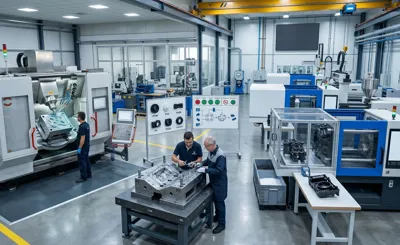
Contract manufacturing of plastic parts and mold integration.
Contract manufacturing of plastic parts is the process of integrating existing injection molds, owned by the customer, into the manufacturer's machine park for mass production. During the mold integration phase, the mold's mounting plates, ejector group, runner dimensions, and cooling nipple inlets are adapted to the technical specifications of the injection molding machine (50-1200 tons). Raw material drying operations (using dew-point honeycomb dryers), melting temperature control, and part quality are monitored according to ISO 9001 standards to optimize unit costs per part.