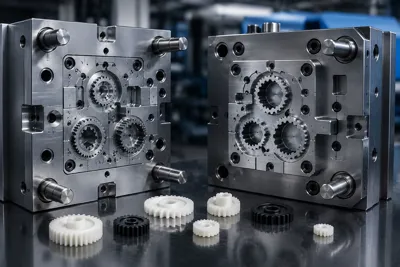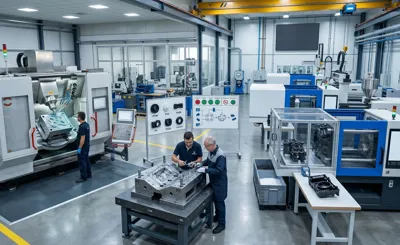
Wear protection in rubber molds and extending mold life.
Wear in rubber molds is a combination of chemical corrosion caused by acidic gases released by sulfur and peroxide-based agents in the raw material during vulcanization (160°C - 200°C) and physical abrasion (friction) caused by carbon black/mineral fillers. To extend mold life, DIN 1.2344 hot work tool steels with a hardness of at least 48-52 HRC are preferred in the cavities, and CrN (Chromium Nitride) or PVD coatings are applied to the steel surfaces to increase wear resistance. As part of periodic mold maintenance, mold release residues and polymer gas deposits are removed using chemical solvents in ultrasonic cleaning units that do not damage the steel geometry.
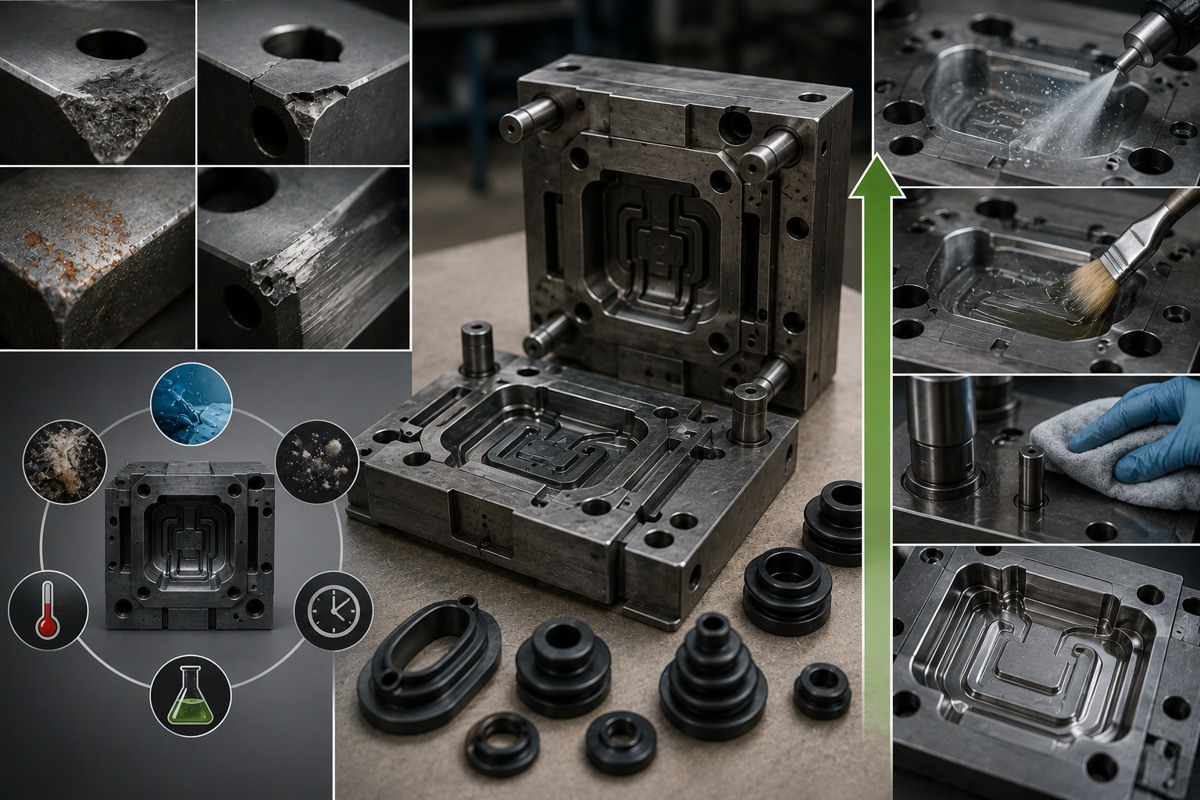
In B2B rubber component manufacturing processes, molds are exposed to much more aggressive physical and chemical stresses compared to plastic injection molds. In order for thermoset rubber compounds to complete the vulcanization (curing) reaction, mold blocks must be continuously maintained at temperatures between 160°C and 200°C and operated under high hydraulic press pressures.
Over time, wear problems in rubber molds cause flash formation along parting lines, dimensional tolerance losses according to (TS ISO 3302-1), and deterioration of the final product surface quality. Premature deformation of the mold results in high revision costs and unplanned production downtime for B2B purchasing managers and factory executives. Extending mold service life is a financial necessity that directly reduces the amortization cost per manufactured part.
Wear Causes in Rubber Molds: Root Cause Analysis
To permanently prevent or delay deformation in mold cavities, the root causes triggering wear must be analyzed at metallurgical and chemical levels:
1. Physical Abrasion (Effect of Carbon Black and Mineral Fillers)
Rubber compounds contain high amounts of carbon black, silica, talc, calcium carbonate and similar hard mineral fillers to improve mechanical strength. When these compounds flow into mold cavities under high pressing pressure, they create an abrasive effect on steel surfaces, causing microscopic wear. Especially gate areas and narrow cross-section regions are the zones where physical abrasion is most intensive.
2. Chemical Corrosion (Damage Caused by Sulfur and Fluorine Gases)
Vulcanization agents (sulfur / peroxide systems), which provide cross-linking of rubber molecules, release acidic gases when they react under high temperatures. During the processing of fluorocarbon rubbers such as FKM (Viton), which are widely used in defense and aerospace industries, released fluorine-based gases chemically attack standard steel surfaces and cause micro-pitting corrosion.
3. Mold Release Spray Residues and Deposit Formation
During production, mold release sprays (silicone or fluoropolymer based) are used to prevent rubber parts from sticking to steel surfaces and to ensure easy demolding. Under high temperatures, these sprays penetrate the microscopic pores of the mold surface and combine with polymer gases over time, creating hardened mold release residues and deposits (fouling). This deposit layer damages part geometry and causes dimensional deviations.
Strategies to Extend Mold Life and Advanced Engineering Solutions
Our engineering team applies advanced manufacturing and surface treatment technologies to extend the production life of rubber molds beyond millions of cycles:
Metallurgical Hardening and Surface Treatments (Nitriding & PVD Coating)
Annealed or soft steels should never be used for rubber mold bodies and cavities. After machining the cavities, hot work tool steels such as DIN 1.2344, hardened in vacuum furnaces to at least 48-52 HRC, should be preferred. To maximize wear and corrosion resistance, gas nitriding is applied to the steel surface, increasing surface hardness to approximately 65-70 HRC at the micro level. Additionally, for FKM or aggressive NBR compounds, mold surfaces are protected with CrN (Chromium Nitride) or TiN (Titanium Nitride) PVD (Physical Vapor Deposition) coating technologies, completely blocking chemical corrosion effects.
Proper Mold Design and Ventilation Channels
The inability to evacuate trapped acidic gases inside the mold accelerates corrosion. To prevent this issue, gas ventilation channels are machined along parting lines and blind areas with a depth that prevents rubber leakage and flash formation (maximum 0.01 - 0.02 mm). By using vacuum-integrated rubber molding systems, the air trapped inside the cavity is removed immediately before the press closes. This process eliminates gas burns and significantly extends mold service life.
Periodic Mold Maintenance Protocols for Corporate B2B Companies
For sustainable mass production quality, rubber mold maintenance should not be left to operator discretion but should be managed through a structured corporate TPM (Total Productive Maintenance) protocol:
| Maintenance Type / Period | Applied Technical Process | Purpose |
| End-of-Shift Maintenance (Every 8 Hours) | Mold surfaces are cleaned using soft brass brushes and solvents, followed by the application of anti-corrosion protective oil. | Preventing the accumulation and layering of mold release sprays and rubber particles. |
| Periodic Ultrasonic Maintenance (Every 20,000 Cycles) | The mold is removed from the press and disassembled. Cavities are cleaned from deposits using ultrasonic cleaning waves in special chemical cleaning tanks. | Eliminating microscopic deposits without applying mechanically abrasive methods such as sandblasting that may damage the steel surface. |
| Major Metallurgical Inspection (Every 100,000 Cycles) | Wear plates, ejector pins and locking mechanisms are disassembled; dimensional measurements (CMM) and hardness inspections (HRC) are performed. | Detecting mechanical wear at an early stage and permanently preventing flash formation on molded parts. |
Frequently Asked Questions (FAQ)
Is sandblasting a correct method for removing deposits from mold surfaces?
Sandblasting quickly removes rubber residues from mold surfaces; however, abrasive particles such as glass beads, sand or walnut shells gradually round the sharp edges of steel cavities and damage mold tolerances. This condition may cause excessive flash formation in molded parts. The safest methods are ultrasonic cleaning tanks or laser cleaning technologies that do not mechanically damage the steel surface.
Why should stainless steel be preferred for FKM (Viton) compounds?
During vulcanization, FKM releases highly corrosive gases derived from hydrofluoric acid compounds. Standard hot work steels (for example 1.2311) cannot withstand this chemical attack and may corrode and deteriorate within a short period. Therefore, hardened stainless mold steel containing at least 13% chromium, such as DIN 1.2083, should be used for FKM molds.
How does reducing mold release spray usage affect mold service life?
Reducing the use of mold release sprays slows down deposit formation (fouling) on the mold surface, extends cleaning intervals and positively affects mold lifetime. To minimize the need for release agents, permanent PTFE (Teflon)-based surface coatings or advanced mirror polishing processes can be applied to mold cavities.
Protect Your Mold Investments with Advanced Surface Technologies and Professional Maintenance
Leave behind chronic flash problems, premature cavity wear and part sticking issues during mass production.
kaucukplastikkalip.com
manufactures every rubber mold using high-hardness
DIN 1.2344 steels, protects mold surfaces with CrN PVD coating solutions according to the chemical characteristics
of your rubber compound, and manages periodic maintenance through professional TPM protocols within its own
facilities.
Share your technical requirements with us for long-life, zero-defect B2B rubber molding projects and receive your
engineering quotation today.
Recommended for You
Automotive rubber and plastic parts manufacturing and OEM solutions.
In the automotive sub-industry, the production of rubber and plastic parts is carried out according to IATF 16949 Quality Management System standards. Active production processes include high-temperature and oil-resistant ACM, AEM, and FKM (Viton) compounds for engine seals, and natural rubber (NR) and EPDM formulations for dynamic damping in suspension lines. Dimensional verifications are performed using 3D CMM devices within the scope of PPAP (Production Part Approval Process) processes and are guaranteed to meet TS ISO 3302-1 M1/M2 accuracy classes.