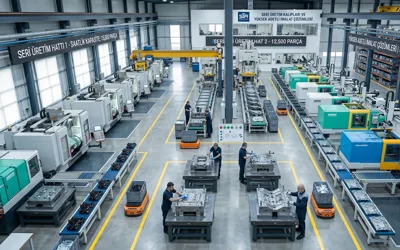
Rubber injection and compression molding
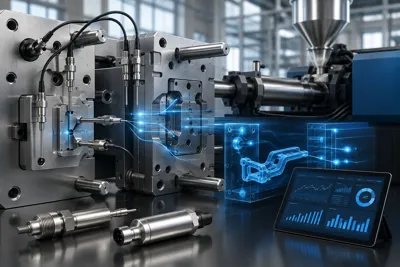
Rubber injection molding and compression molding are two fundamental industrial methods that manage the vulcanization processes of elastomeric raw materials. Rubber injection molding is based on the principle of plasticizing the raw material in a screw-barrel system at a temperature of 70°C - 90°C and then pressing it under high pressure into closed and hot (170°C - 200°C) mold cavities. Compression molding, on the other hand, involves placing pre-shaped raw material (preform) directly into an open mold and shaping it with hydraulic press pressure. While the injection method is ideal for high-volume, precisely toleranced, and complex geometric OEM parts; the compression method provides high cost/performance for large-sized components and low-budget prototype manufacturing.

When introducing a new sealing element, bellows, automotive mount, or machine damping component in B2B industries, the most critical decision before moving into mold manufacturing is selecting the correct production method. The two main processing technologies used for elastomeric raw materials (NBR, EPDM, FKM, Silicone, etc.) are rubber injection molding and conventional compression molding technologies.
The selected method does not only determine the mold manufacturing budget (CAPEX); it also directly affects the unit production cost during mass production, cycle times, scrap (runner) rates, and the dimensional tolerance stability (TS ISO 3302-1) of the final product. Selecting the most suitable method according to the annual production volume and technical specifications of the project is the first requirement for a flawless supply chain.
Rubber Injection Molding Technology and Process Dynamics
Rubber injection technology operates similarly to plastic injection principles but has opposite thermal parameters. In this method, rubber strip raw material is plasticized inside a cold screw-barrel unit (generally between 70°C - 90°C) until it reaches a homogeneous viscosity without melting. Afterwards, it is injected under high hydraulic pressure into mold cavities that have already been closed and heated to the vulcanization temperature (160°C - 200°C).
Technical Advantages of the Injection Method
Short Cycle Times: Since the raw material is heated inside the barrel before entering the mold, the vulcanization (curing) reaction starts and completes much faster inside the mold cavity. This significantly increases mass production speed.
Maximum Precision: Since the material is injected while the mold is closed, achieving TS ISO 3302-1 M1 precision class tolerances becomes much easier.
Minimum Scrap and Automation: It is fully compatible with robotic part removal systems. Parting line flash is minimized, and the risk of human error is reduced to the lowest level.
Disadvantages and Investment Cost (CAPEX)
Mold designs include hot runner systems, injection channels, and complex ventilation (gas evacuation) systems; therefore, mold manufacturing costs are higher compared to compression molds. For low-volume projects, the return on investment period may be longer.
Compression Molding Technology and Process Dynamics
Compression molding is one of the oldest and most reliable methods in the elastomer processing industry. In this process, rubber raw material is first weighed precisely and cut into preforms with shapes close to the final part geometry. This cold raw material piece is manually placed into open mold cavities heated to vulcanization temperature. When the hydraulic press closes with high tonnage force, the raw material is compressed, fills the mold cavity, and is left to cure under pressure.
Technical Advantages of the Compression Method
Low Mold Cost: Since it does not require runner systems or complex injection channels, steel mold manufacturing is much more economical and can be produced faster.
Large Part Production: It is the most reliable and indispensable method for large rubber mounts, heavy-duty vehicle suspension components, and large-diameter industrial bellows.
Easy Material Changeover: Since mold cleaning is easier, small-batch productions with different hardness levels and colors can be performed efficiently using the same mold.
Limitations and Operational Disadvantages
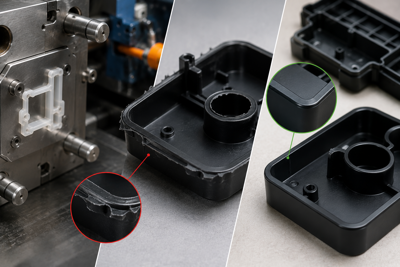
Since the raw material enters the mold cold, heat transfer to the center of the part and the vulcanization time (cycle time) are longer. The process requires intensive manual labor. There is a higher risk of thick flash formation along mold parting lines, which creates additional trimming and finishing costs.
Decision-Making Criteria in B2B Purchasing and Project Management
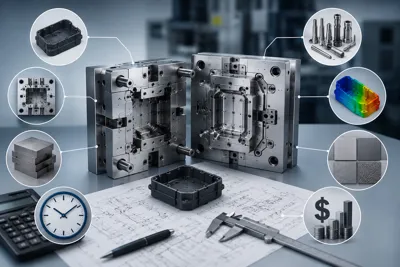
Supply chain managers and project leaders should base their process selection on the "Total Production Quantity x Unit Cost" projection. If your annual part requirement is high, the long cycle times and high labor costs associated with compression molding will quickly eliminate the low mold cost advantage. Conversely, manufacturing an expensive injection mold for an industrial sealing component requiring only 500 units annually can negatively affect the financial feasibility of the project.
At kaucukplastikkalip.com, we analyze your projects from both technical and financial perspectives and determine the most rational production method for you with our machinery infrastructure and mold manufacturing capabilities supporting both technologies.
Frequently Asked Questions (FAQ)
Which method is more reliable for rubber-to-metal bonding (overmolding) projects?
Rubber-to-metal bonding can be performed with both methods. However, if the part geometry is complex and there is a risk of the metal insert shifting or moving inside the mold under high pressure, transfer molding or rubber injection molding provides a much safer solution. Since the rubber flow inside the closed mold is more balanced, the metal insert remains securely positioned.
Can a compression mold be converted into an injection mold later?
No, it cannot be directly converted. Injection molds require runner entrances (gates), manifold connection points, and specially designed cavities for injection nozzles inside the steel blocks. Compression molds, on the other hand, consist only of cavity blocks and have a completely different design architecture.
How is raw material waste optimized in injection molding?
In rubber injection systems, unlike plastics, runner waste cannot be recycled (ground and reused) because vulcanized rubber has permanently completed its chemical bonding process. Therefore, to reduce raw material waste, "cold runner" systems are used in molds. These systems keep the rubber inside the runner block cold and prevent it from vulcanizing, reducing waste to zero.
Let's Design the Most Optimized Production Technology for Your Projects Together
Do not hesitate when balancing high mold costs and long cycle times. As kaucukplastikkalip.com, we analyze your project's technical drawings and annual order projections to engineer the most cost-effective rubber molding technology specifically for your needs. Whether you require high-speed injection molding lines or large-scale compression molding solutions, we manage all processes under one roof. Request a professional B2B quotation and process proposal from our engineering team together with your 3D data.
Recommended for You
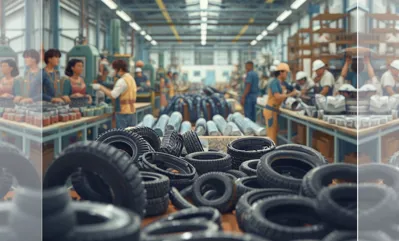
Automotive rubber and plastic parts manufacturing and OEM solutions.
In the automotive sub-industry, the production of rubber and plastic parts is carried out according to IATF 16949 Quality Management System standards. Active production processes include high-temperature and oil-resistant ACM, AEM, and FKM (Viton) compounds for engine seals, and natural rubber (NR) and EPDM formulations for dynamic damping in suspension lines. Dimensional verifications are performed using 3D CMM devices within the scope of PPAP (Production Part Approval Process) processes and are guaranteed to meet TS ISO 3302-1 M1/M2 accuracy classes.