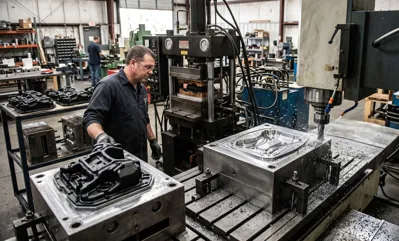
Burr problems in plastic injection molding and solutions.
In plastic injection molding, flash is a dimensional and aesthetic manufacturing defect caused by molten polymer leaking out of mold parting lines, core surfaces, or ejector pin cavities under high injection pressure (>1000 bar). This problem stems from insufficient clamping force, excessive injection speed, mechanical crushing or abrasion of mold kissing surfaces, or polymer melt temperatures that excessively reduce viscosity. Solutions include optimizing compression ratios through Moldflow analysis and revising mold steels with micron-precision laser welding or CNC grinding.
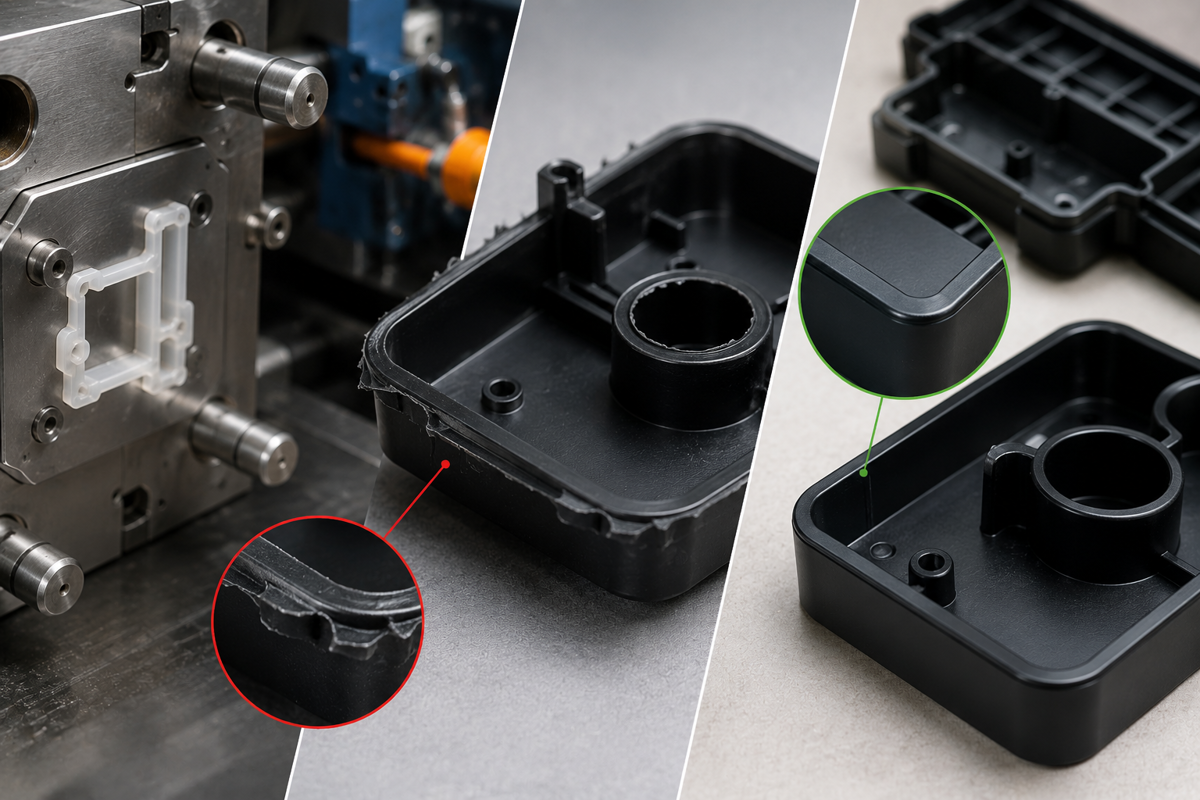
One of the most common defects threatening production stability and part quality in plastic injection lines is the flash problem. Plastic injection flash problems occur when the high-temperature and high-pressure liquid polymer leaks beyond the boundaries surrounding the mold cavities during the injection cycle and solidifies.
In B2B part supply chains, flash-contaminated products are directly rejected by quality control departments due to dimensional tolerance failures, safety risks caused by sharp edges, and interference with snap-fit mechanisms. In contract manufacturing or mass production lines, flash formation requires additional manual labor (trimming/deflashing operations), extending cycle times, increasing scrap rates, and directly damaging production profitability.
Fundamental Causes of Plastic Injection Flash Problems
To permanently eliminate flash defects, a proper root cause analysis must be performed, and it must be clearly determined whether the problem originates from the mold, the process parameters, or the injection molding machine:
1. Mold-Related Mechanical Causes (Wear and Deformation)
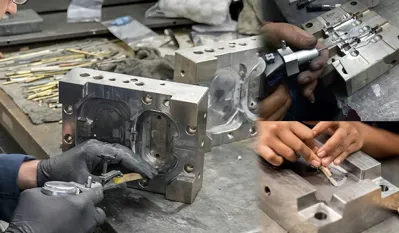
The parting surfaces where the two main halves of the mold (core and cavity sides) contact each other gradually wear or deform due to high clamping pressures and the corrosive effects of plastic gases. A small piece of plastic trapped between the mold surfaces can prevent the steel surfaces from fully closing by a few microns. In addition, clearances formed in moving slider mechanisms or worn ejector pins exceeding tolerance limits allow molten plastic to penetrate these micro gaps, resulting in flash formation.
2. Injection Process and Parameter-Related Causes
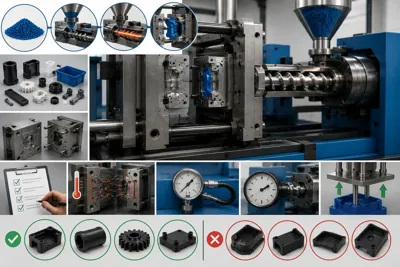
Incorrect configuration of process parameters on the injection molding machine directly triggers flash formation. Among the most common causes of flash in injection molding is excessive filling of cavities with raw material (overpacking). Excessively high injection speed can cause the molten plastic to temporarily deform the mold surfaces. Furthermore, when the melt temperature exceeds the polymer's ideal processing range, viscosity decreases significantly (fluidity increases), allowing the plastic to escape through even the smallest micro gaps.
3. Machine Infrastructure and Insufficient Clamping Force
If the internal pressure generated by the injected plastic inside the mold cavity exceeds the clamping force applied by the injection molding machine to keep the mold closed, the mold opens slightly at the micron level. In projects with large projected surface areas, such as automotive bumpers or large household appliance panels, the product area multiplied by cavity pressure must not exceed the locking tonnage capacity of the machine. Selecting a machine with insufficient tonnage is one of the primary causes of chronic flash problems.
Mold Revision Processes: Laser Welding and Micron-Precision Grinding
If flash formation, which is among the most common plastic injection defects, cannot be eliminated despite process and parameter optimization, the problem is entirely related to the mechanical structure of the mold. At this stage, the mold transferred to our tool manufacturing facility is inspected using a blue dye test (spotting) on the parting surfaces.
Worn or deformed steel surfaces are rebuilt using micro laser welding technology with steel filler wires that restore the original hardness values (for example, 50-52 HRC). After laser welding, mold blocks are re-machined at micron-level accuracy using high-precision CNC machining centers and surface grinding machines, ensuring a perfect zero-clearance contact at the mold parting line. Slider cavities and ejector bushings are renewed, restoring the mold to its original geometric precision.
B2B Supply Assurance: Zero-Flash Mass Production Management
At kaucukplastikkalip.com, we operate with a zero-flash production philosophy within our B2B supply partnerships. During the commissioning phase of your projects, the required clamping force tonnage is calculated through software-based analyses (Moldflow), and your mold is matched with the most suitable injection machine in our production infrastructure. During production, mold protection systems remain active to prevent part entrapment between mold surfaces and avoid steel deformation before it occurs. As a result, technical plastic components delivered to your assembly lines require no additional manual trimming operations, and dimensional stability is guaranteed.
Frequently Asked Questions (FAQ)
Do ventilation (venting) channels applied to the mold parting line cause flash?
The depth of ventilation channels created to evacuate air trapped inside the mold must be designed according to the polymer type. For example, for highly flowable materials such as PP or POM, these channels should generally have a maximum depth of 0.02 mm. If these channels become deformed during cleaning over time or their depth exceeds 0.04 mm, plastic can penetrate into these channels and create line-shaped gas flash defects.
What is the role of holding pressure in flash problems?
Holding pressure is the hydraulic pressure applied after mold filling to prevent shrinkage and sink marks while the plastic part cools. If holding pressure is set higher than required or the holding time is adjusted too long, additional polymer is compressed into the mold cavity, causing flash formation along the mold parting surfaces.
What is the relationship between mold steel hardness and flash formation?
Molds manufactured from low-hardness steels (for example, non-hardened 1.2311 or aluminum molds) can experience micro-level deformation under high injection pressures over time, causing the parting surfaces to lose their precision. This deformation leads to mold separation and chronic flash problems. High-hardness hot work steels such as 1.2344 (50 HRC) maintain their rigidity against these pressures.
Eliminate Flash Costs and Quality Defects in Your Mass Production Projects
We completely eliminate chronic flash problems experienced in your existing molds through our process engineering expertise and advanced mold revision infrastructure. For new projects designed from the beginning, we provide flawless mass production solutions with the correct steel hardness and machine tonnage matching. Share the 3D data and mold specifications of the parts experiencing flash problems with us, and let our technical team initiate a professional B2B solution process.
Recommended for You
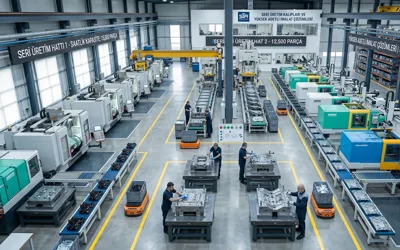
Mass production molds and high-volume manufacturing solutions.
High-volume series production mold manufacturing is an engineering discipline applied to minimize cycle times and increase line efficiency (OEE) to over 85%. In high-volume manufacturing lines, powder metallurgical steels (Bohler M390, Elmax, etc.) with a hardness of 52-54 HRC according to the SPI Class 101 standard and corrosion-resistant DIN 1.2083 alloys are used. In multi-cavity molds, hot runner systems and conformal cooling channels that follow the part geometry in 3D are integrated for a balanced polymer distribution.