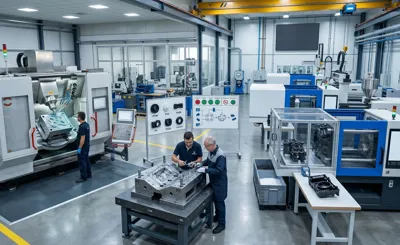
Strategies for Reducing Mold Costs
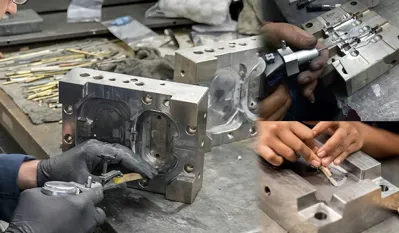
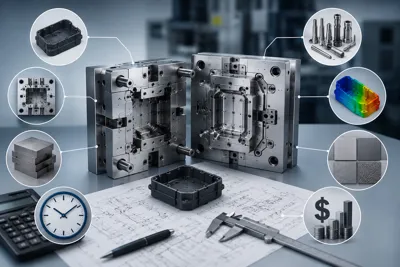
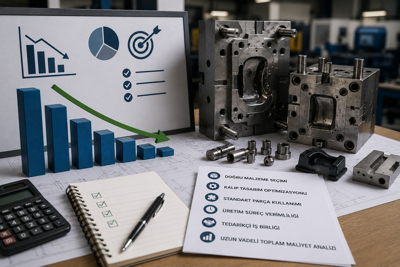
Strategies for reducing mold costs include eliminating undercuts through DFM (Design for Manufacturing) analyses during product development (R&D), optimizing part wall thicknesses, and simplifying core mechanisms. Selecting cavitation (number of cavities) and steel grades according to SPI standards (e.g., 1.2311 vs. 1.2344) based on annual part projections optimizes the initial mold investment cost (CAPEX) by 30% to 50%. The use of modular mold holder systems and standard mold elements permanently reduces CNC machining times and per-part depreciation costs.

When a new product is launched in B2B industries, the initial manufacturing budget of a plastic or rubber injection mold represents one of the largest portions of the total project cost. Purchasing managers, factory directors, and R&D engineers often aim to reduce the initial investment by obtaining mold quotations from the lowest-cost suppliers. However, the methods for reducing mold costs without compromising quality are not achieved by simply lowering machining labor costs; they are achieved through advanced engineering, intelligent part design, and the implementation of the right supply strategies. Cost reductions without a technical foundation create chronic flash problems, slow cycle times, and frequent production stoppages during mass production, ultimately causing financial losses.
1. Cost Optimization Through DFM Analysis During the Product Design Phase
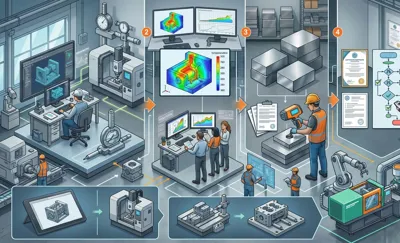
The most fundamental factor determining the mold manufacturing budget is the geometry of the part itself. DFM (Design for Manufacturing) studies performed before the product design is finalized (frozen) provide significant cost savings in the overall budget.
Eliminating Undercuts and Reducing Core Mechanism Requirements
Features such as clips, holes, or protrusions that prevent the plastic or rubber component from being removed from the mold with a straight movement are called "undercuts". These details require the integration of movable core mechanisms (sliders) into the mold. Each mechanical slider directly increases the mold cost. If undercuts are eliminated through DFM analysis by repositioning clip locations or redesigning the component into a two-piece structure, the mold structure becomes simpler and mechanical machining costs are directly reduced.
Correct Draft Angles and Rib Design Strategies
Excessive wall thickness in a component causes both unnecessary raw material consumption and longer cooling times (cycle times) during injection molding. When wall thicknesses are optimized and mechanical strength is achieved through ribs, thermal management inside the mold becomes easier. Adding minimum draft angles between 1.5° and 2° to the design reduces the need for mold polishing and minimizes the risk of part sticking, shortening mold manufacturing time.
2. Balancing Mold Cavitation According to Annual Production Forecasts
During purchasing processes, selecting the correct cavitation (number of mold cavities) directly controls the cost balance. A multi-cavity mold (for example, an 8-cavity mold) requires larger steel blocks, more complex runner systems, and longer CNC machining hours compared to a single-cavity mold, making it significantly more expensive.
However, producing a 2-cavity mold simply to reduce costs for a component requiring 500,000 units annually is a major financial mistake. Because a 2-cavity mold increases the total machine operating time and energy consumption by up to four times, dramatically raising the unit production cost. Purchasing professionals should establish a "Annual Production Volume / Machine Cycle Time" matrix to determine the most rational cavity number, optimizing the budget while avoiding unnecessary over-cavitation.
3. Selecting the Correct Steel Grade: Avoiding Over-Engineering
Selecting the appropriate alloy according to the expected service life of the project prevents unnecessary over-engineering costs in mold manufacturing. For a static cover component with an annual production volume of only 10,000 or 20,000 units, choosing an expensive DIN 1.2344 hot work tool steel hardened to 50 HRC in vacuum furnaces is an unnecessary investment. For these low and medium-volume projects, pre-hardened steels such as DIN 1.2738 or DIN 1.2311 (P20), which do not require additional heat treatment costs, provide excellent price/performance advantages and can reduce the mold budget by nearly 25%. For high-volume projects (above 1 million production cycles), hardened steel selection is already a necessity.
4. Using Standard Mold Components and Modular Mold Bases (Master Mold System)
Instead of manufacturing non-custom components of the mold from scratch (such as ejector pins, bushings, guide pillars, springs, and locking mechanisms), sourcing them as ready-made components according to global industrial standards (DME, HASCO, etc.) minimizes labor hours in the mold workshop and reduces the risk of errors.
Furthermore, if your company plans to manufacture a product family (series of components) with the same external dimensions but different internal geometries, it is possible to design a modular mold base (master mold) system instead of manufacturing a complete mold set from scratch for each individual part. In this system, the mold base (external frame and hydraulic/cooling connections) remains fixed, while only the steel blocks containing the internal cavities (cores) are replaced. As a result, future mold investments can achieve a direct financial saving between 40% and 60%.
Total Cost of Ownership (TCO) Decision Matrix in Mold Investment
| Investment Strategy | Impact on Mold Price (CAPEX) | Impact on Mass Production Cost (OPEX) | Long-Term B2B Advantage |
| Advanced DFM & Undercut Elimination | Reduced by 15% - 25% | No Change | Mechanical failure and maintenance risks are minimized |
| Master Mold (Modular Mold Base) | Reduced by 40% - 60% | No Change | Minimum initial investment during product family transitions |
| Correct Cavitation & Steel Matching | Optimized by 20% - 30% | Savings up to 35% | Part amortization cost is minimized |
| Hot Runner Integration | Increases by 15% - 20% | Reduced by 10% - 25% | Raw material savings by eliminating plastic waste |
Frequently Asked Questions (FAQ)
What hidden costs occur in mass production when reducing mold costs?
If low-quality steel, insufficient cooling channels, or inexpensive standard components are used to reduce mold costs; the mold may frequently generate flash during mass production, cavities may wear out, and plastic gases may corrode the surface. Most importantly, insufficient cooling channel design increases the cycle time of the injection machine; this raises the machine hourly cost paid per part and completely eliminates the initial mold savings.
Is the Master Mold (Modular Mold Base) system suitable for every project?
No, it is not suitable for every project. The master mold system is ideal for component families with very similar external dimensions, the ability to be produced on the same injection machine tonnage, and the same raw material type (for example: different button models, similar covers, and electronic housings with variations). For components with significantly different geometries and dimensions, separate molds are required.
Why is hot runner integration presented as a cost-saving method despite increasing mold costs?
A hot runner system increases the initial mold manufacturing cost; however, it reduces raw material waste (cold runner scrap) to zero. If the processed raw material is an expensive engineering plastic (PA66, PC, POM, etc.) and the annual production volume is high, the tons of plastic material saved by eliminating runners can fully amortize the initial hot runner investment within a few months and provide direct profit in the following years.
Optimize Your Mold Investments Through Engineering Intelligence
You do not have to compromise on quality or mold lifetime to reduce your project’s mold budget. As kaucukplastikkalip.com, we analyze your part data through our concurrent engineering infrastructure, optimize your initial mold investment costs (CAPEX) with the most suitable cavitation and modular mold solutions, and bring them to rational levels. Share your new project’s 3D designs and target production volumes with us, and let us prepare a professional B2B molding and manufacturing proposal that protects your budget.
Recommended for You
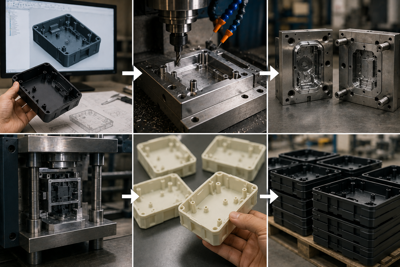
Prototype molding and mass production cost advantages
Soft tooling is a pre-series manufacturing method that enables the rapid and low-cost production of 50 to 5,000 actual raw material parts before resorting to costly mass production molds (hard tooling). It is typically manufactured using easily machinable aluminum alloys (Alumec 89, 7075 T6) or pre-hardened mild steels (1.2311). Thanks to soft tooling, assembly, strength, DFM verification, and PPAP sample testing of the final part can be performed under real injection molding conditions, minimizing the risk of high revision costs associated with mass production.