plastik kaucuk kalıp emin pul konya
KAUÇUK PLASTİK KALIP
Home Capacity & Services Industrial Blog Contact
Request RFQ
© 2026 Kaucuk Plastik Kalıp A.Ş.
ISO 9001:2015 Certificated
Mühendislik Günlüğü

Industrial Knowledge Base

Filtered Tag: defense industry sealing
Clear Filter [X]
EPDM, NBR, and Silicone: Which rubber raw material should be chosen?
July 26 41 Views

EPDM, NBR, and Silicone: Which rubber raw material should be chosen?

The selection of rubber raw materials is based on the continuous operating temperature to which the final elastomeric part will be exposed, the chemical fluids it will come into contact with (oil, fuel, solvent), and the environmental factors it will be exposed to (ozone, UV, weather conditions). NBR (Nitrile) offers superior mineral oil and fuel resistance between -30°C and +110°C, while EPDM provides excellent ozone, UV, and steam resistance in the range of -40°C to +140°C. Silicone (VMQ), on the other hand, demonstrates full compliance with food and medical standards (FDA) with its physiological harmlessness in the extreme thermal spectrum of -60°C to +220°C.

How is steel selected for plastic injection molds?
July 26 51 Views

How is steel selected for plastic injection molds?

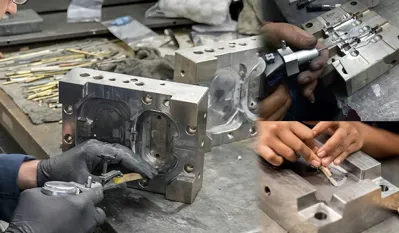
Steel selection for plastic injection molds depends on the abrasiveness of the polymer to be molded, the annual production volume (SPI classes), and the expected surface finish of the part. For abrasive glass fiber reinforced (GF) polymers, vacuum-hardened DIN 1.2344 hot work steel with a hardness of 48-52 HRC is suitable; for transparent or corrosive PVC/fluoropolymer components, stainless DIN 1.2083 steel containing a minimum of 13% chromium is recommended; and for standard body parts, pre-hardened DIN 1.2738 (P20+Ni) steel offers optimized metallurgical solutions.

Rubber tolerances and TS ISO 3302-1 standard guide.
June 26 83 Views

Rubber tolerances and TS ISO 3302-1 standard guide.

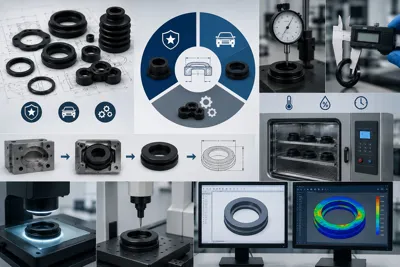
In industrial rubber products, dimensional and geometric tolerances are determined according to the TS ISO 3302-1 standard due to the high shrinkage (1.5% - 4%) and elasticity characteristics of elastomers. This international standard classifies molded parts into three basic classes based on their dimensional accuracy: M1 (Precision/Defense), M2 (High Quality/Automotive), and M3 (Commercial/General Machinery). Measurements are verified using optical and digital measuring instruments in climate-controlled laboratory environments at a temperature of 23°C +/- 2°C and 50% relative humidity, at least 16 hours after the part has completed its vulcanization reaction and thermal stabilization.

Technical plastic products and industrial applications.
June 26 67 Views

Technical plastic products and industrial applications.

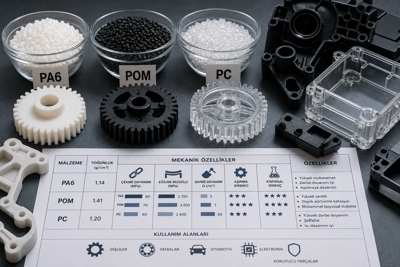
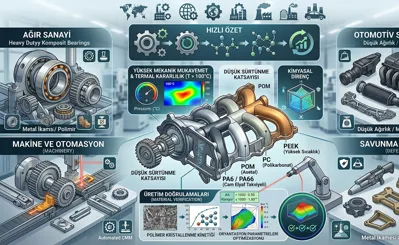
Technical plastic products are components manufactured using engineering plastics (PA6, PA66, POM, PC, PEEK) that, unlike conventional polymers, offer high mechanical strength, thermal stability up to 100°C, chemical resistance, and a low coefficient of friction. They are frequently preferred in metal replacement projects in heavy industry, machinery, automotive, and defense sectors. Production validations are carried out according to ISO 20457 geometric tolerance standards by optimizing the crystallization kinetics and orientation parameters of the polymers.

Contract manufacturing of plastic parts and mold integration.
June 26 52 Views

Contract manufacturing of plastic parts and mold integration.

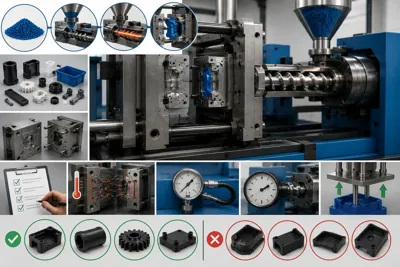
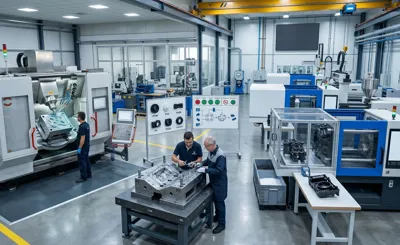
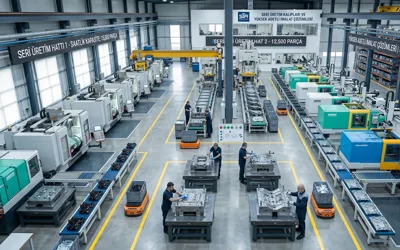
Contract manufacturing of plastic parts is the process of integrating existing injection molds, owned by the customer, into the manufacturer's machine park for mass production. During the mold integration phase, the mold's mounting plates, ejector group, runner dimensions, and cooling nipple inlets are adapted to the technical specifications of the injection molding machine (50-1200 tons). Raw material drying operations (using dew-point honeycomb dryers), melting temperature control, and part quality are monitored according to ISO 9001 standards to optimize unit costs per part.

Mass production molds and high-volume manufacturing solutions.
June 26 79 Views

Mass production molds and high-volume manufacturing solutions.

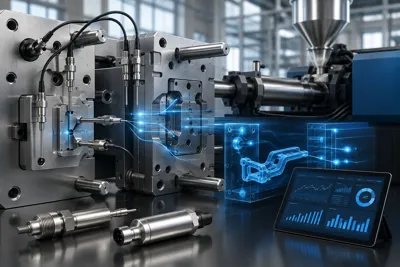
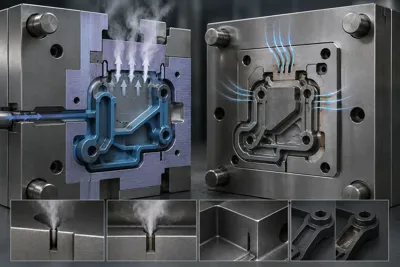
High-volume series production mold manufacturing is an engineering discipline applied to minimize cycle times and increase line efficiency (OEE) to over 85%. In high-volume manufacturing lines, powder metallurgical steels (Bohler M390, Elmax, etc.) with a hardness of 52-54 HRC according to the SPI Class 101 standard and corrosion-resistant DIN 1.2083 alloys are used. In multi-cavity molds, hot runner systems and conformal cooling channels that follow the part geometry in 3D are integrated for a balanced polymer distribution.

Guide to choosing a plastic injection mold manufacturer.
June 26 87 Views

Guide to choosing a plastic injection mold manufacturer.

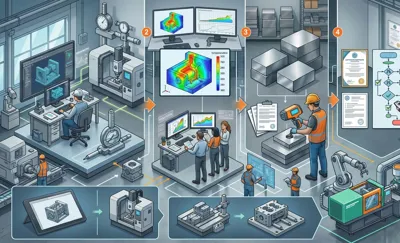
Choosing a plastic injection mold manufacturer involves verifying the supplier's CAD/CAM infrastructure, CNC precision limits (in the micron range), DFM (Design for Manufacturability) competence, and compliance with ISO 9001/IATF 16949 quality management systems. A reliable mold manufacturer should document steel supply with spectrometer analysis certificates (DIN 1.2344, 1.2738, etc.), provide Moldflow flow simulation outputs, and guarantee mold life according to international SPI (Society of Plastics Industry) standards. Integrating design, manufacturing, and mass production injection lines under a single roof reduces project operational risks by 40%.

Defense industry rubber part manufacturing, Military standards.
June 26 75 Views

Defense industry rubber part manufacturing, Military standards.

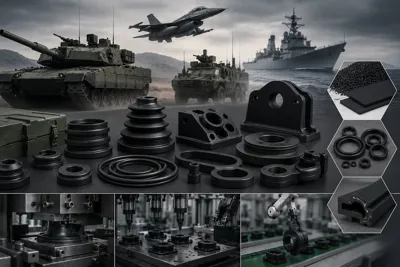
Defense industry rubber component manufacturing is the process of producing elastomer components that withstand extreme environmental conditions in accordance with MIL-STD, MIL-SPEC, and ASTM standards. Sealing elements and damping pads produced for military land, sea, and air platforms are molded with traceable raw materials compliant with the NATO codification system. Mechanical testing of FKM (Viton), Fluorosilicone (FVMQ), and Nitrile (NBR) based components produced for hydraulic systems, fuel tanks, and avionics protection units is verified and certified on a part-by-part basis in accredited laboratory environments.

Custom-designed plastic molds and mass production solutions.
June 26 63 Views

Custom-designed plastic molds and mass production solutions.

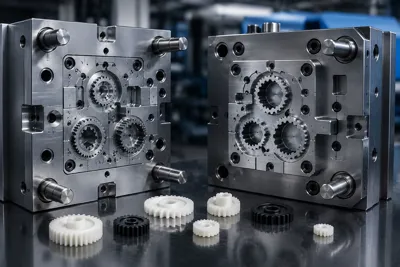
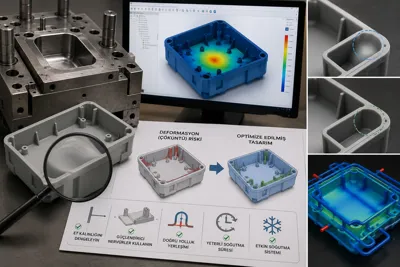
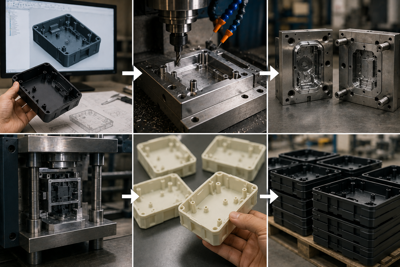
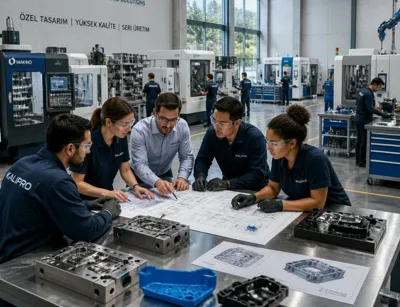
Custom plastic mold manufacturing is the process of transforming conceptual product designs (3D CAD) into functional steel mold cavities using Moldflow plastic flow and thermal cooling simulations. In the mass production phase, servo-hydraulic plastic injection molding machines with clamping forces ranging from 50 to 1200 tons are used, depending on the part geometry. Production processes are optimized according to the crystallization and shrinkage parameters of industrial polymers such as PP, ABS, PC, POM, and PA66, ensuring sustainable part quality according to ISO 20457 dimensional tolerance standards.

Automotive rubber and plastic parts manufacturing and OEM solutions.
June 26 79 Views

Automotive rubber and plastic parts manufacturing and OEM solutions.

In the automotive sub-industry, the production of rubber and plastic parts is carried out according to IATF 16949 Quality Management System standards. Active production processes include high-temperature and oil-resistant ACM, AEM, and FKM (Viton) compounds for engine seals, and natural rubber (NR) and EPDM formulations for dynamic damping in suspension lines. Dimensional verifications are performed using 3D CMM devices within the scope of PPAP (Production Part Approval Process) processes and are guaranteed to meet TS ISO 3302-1 M1/M2 accuracy classes.

Plastic injection mold prices and cost guide.
June 26 121 Views

Plastic injection mold prices and cost guide.

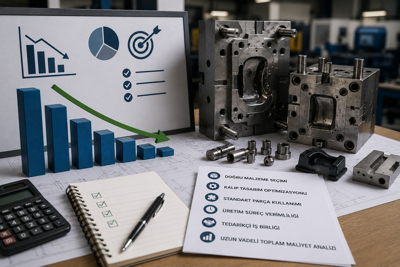
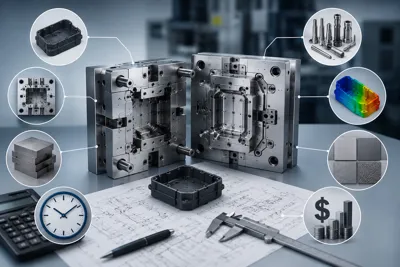
Plastic injection mold prices are determined by part dimensions (mm), cavitation (number of cavities), mechanical core/hydraulic system requirements, and the metallurgical properties of the selected steel alloy (1.2344, 1.2738, 1.2311). Hot runner integration reduces runner waste to zero while increasing the initial mold investment cost by 15% to 30%. Mold life classes are classified as Class 101 (1 million+ cycles) and Class 103 (less than 100,000 cycles) according to SPI (Society of Plastics Industry) standards, and pricing is directly optimized according to these engineering classes.

Rubber mold manufacturing and industrial production solutions.
June 26 125 Views

Rubber mold manufacturing and industrial production solutions.

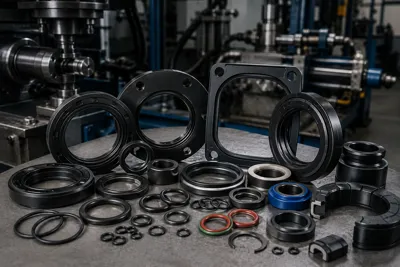
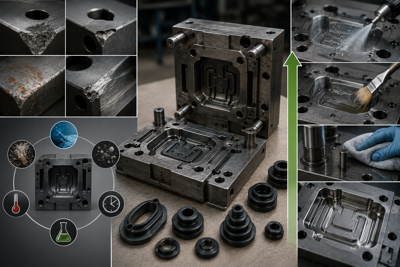
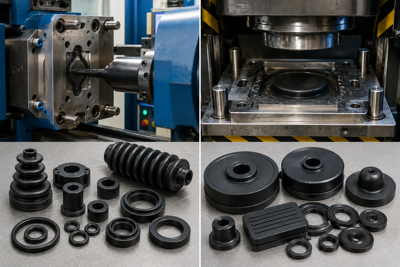
Rubber mold manufacturing is the process of shaping elastomer raw materials through vulcanization reactions under high temperatures (160°C - 200°C) and pressures (50 - 250 bar). Compression, transfer, and injection molding methods are used in industrial production lines. Production tolerances are determined according to the TS ISO 3302-1 standard M1, M2, and M3 classes, while the storage and shelf life criteria of the final elastomeric components are subject to the DIN 7716 standard. High-precision sealing and damping elements are produced for the automotive, defense, and machinery industries using NBR, EPDM, FKM (Viton), and silicone raw materials.

Call Us Call Us

Useful Content Selected for You

View All →
Defense industry rubber part manufacturing, Military standards.
75 Reads

Defense industry rubber part manufacturing, Military standards.

Defense industry rubber component manufacturing is the process of producing elas...

Contract manufacturing of plastic parts and mold integration.
52 Reads

Contract manufacturing of plastic parts and mold integration.

Contract manufacturing of plastic parts is the process of integrating existing i...

EPDM, NBR, and Silicone: Which rubber raw material should be chosen?
41 Reads

EPDM, NBR, and Silicone: Which rubber raw material should be chosen?

The selection of rubber raw materials is based on the continuous operating tempe...

Mass production molds and high-volume manufacturing solutions.
79 Reads

Mass production molds and high-volume manufacturing solutions.

High-volume series production mold manufacturing is an engineering discipline ap...

Automotive rubber and plastic parts manufacturing and OEM solutions.
79 Reads

Automotive rubber and plastic parts manufacturing and OEM solutions.

In the automotive sub-industry, the production of rubber and plastic parts is ca...